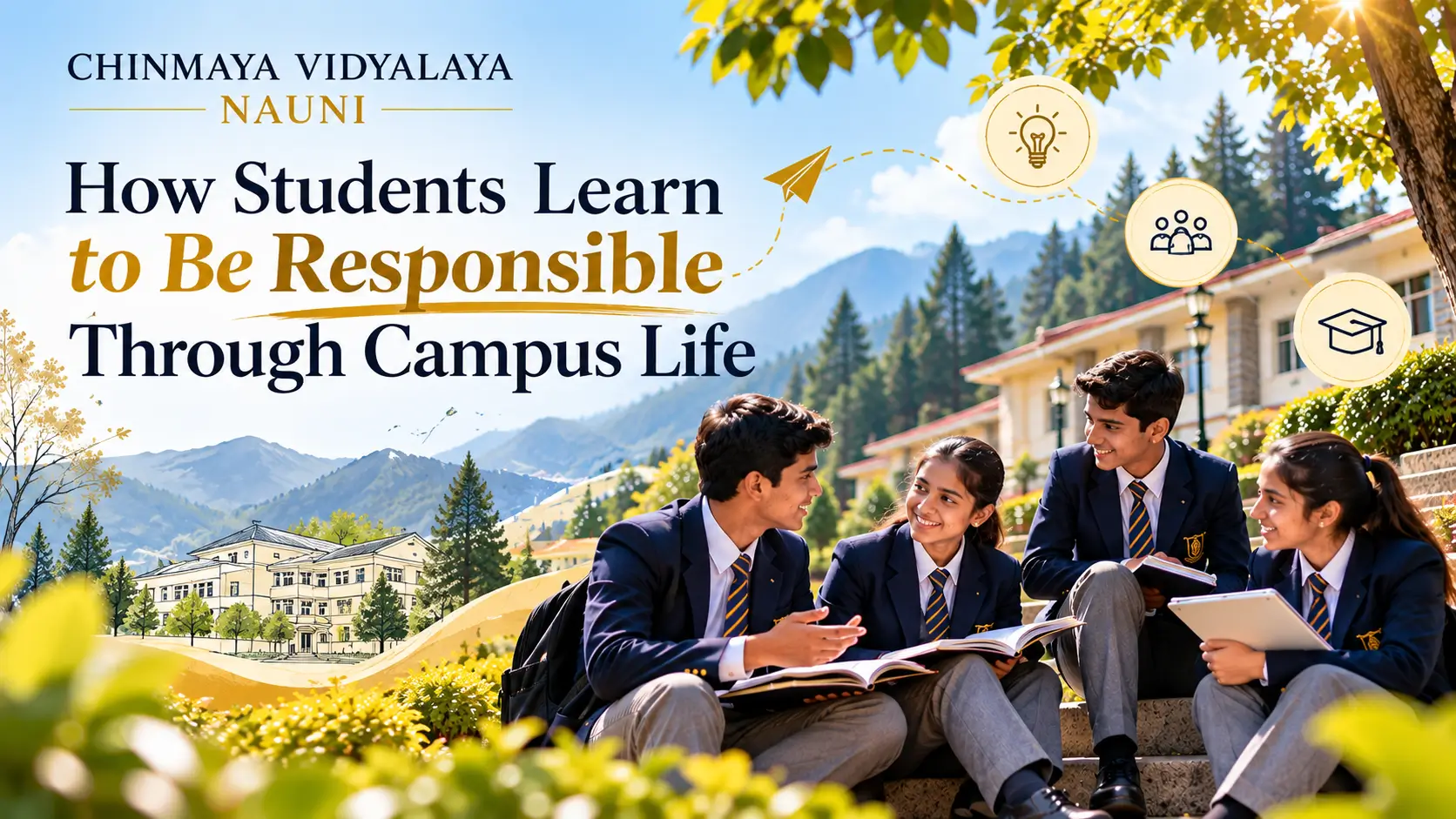
How Students Learn Student Responsibility Through Campus Life
Parents often think about academics, teachers, facilities, and extracurricular activities when choosing a school for their child. These are all important, but there is another part of education that is easy to overlook: learning how to take responsibility.
A child may understand responsibility in theory, but real learning happens when they have to manage everyday situations on their own. Keeping track of belongings, arriving on time, completing assigned tasks, working with classmates, and making sensible choices are simple experiences that gradually shape a student’s habits.
This is where student responsibility through campus life becomes meaningful. A well-managed school campus gives students regular opportunities to handle small responsibilities, learn from mistakes, and understand that their choices have consequences.
For students living in boarding or residential schools, these experiences become part of their daily routine. They learn to manage aspects of their lives that parents may normally handle at home. Over time, these small experiences can help children become more organised, dependable, and confident.
What Does Student Responsibility Through Campus Life Really Mean?
Responsibility is more than simply following school rules. A responsible student begins to understand that certain tasks belong to them and that they should complete those tasks without constant reminders. For example, a student may need to remember their class schedule, organise their school materials, complete homework, keep their belongings safe, or reach an activity on time.
Student responsibility through campus life means giving children opportunities to practise these habits in real situations.
A teacher can tell a student to be punctual, but arriving at class on time every day gives the student a chance to develop that habit. Similarly, being told to keep belongings organised is different from actually having to find a missing notebook before class.
These everyday experiences make responsibility practical rather than theoretical.
How Daily Routines Teach Students Responsibility
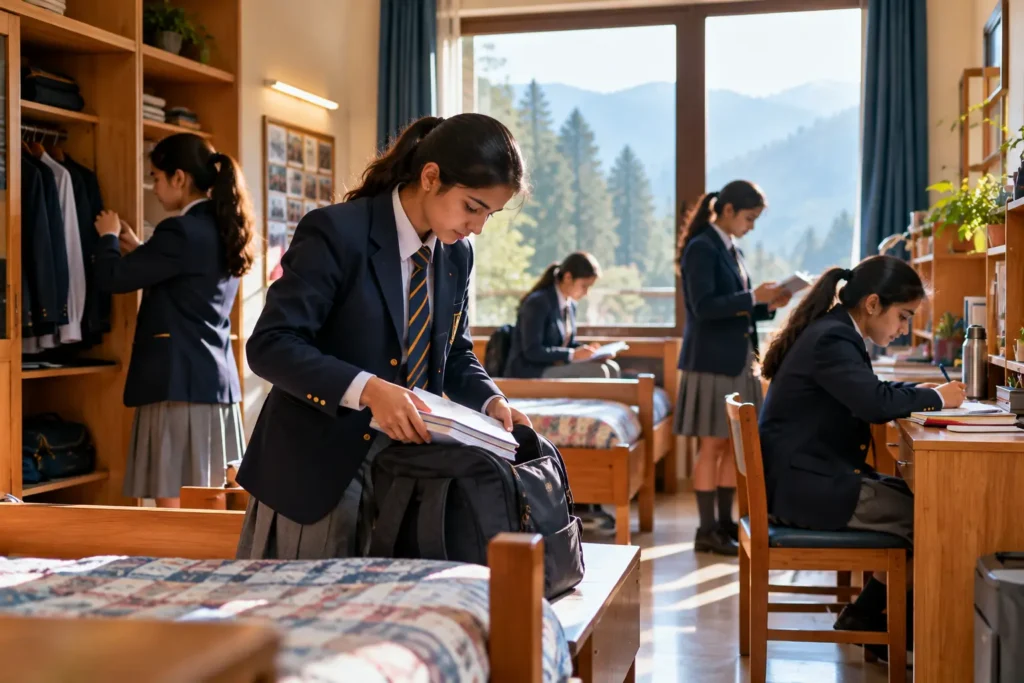
Daily routines are among the simplest ways students learn to take ownership of their responsibilities.
On a school campus, students may have a fixed timetable for classes, meals, study periods, sports, activities, and rest. Following this routine requires them to pay attention to time and prepare for what comes next.
Students may also be responsible for:
– Keeping their personal belongings organised
– Looking after books and school materials
– Keeping their rooms or personal spaces tidy
– Arriving at classes and activities on time
– Completing assigned work
– Following agreed campus routines
– Taking care of shared spaces
None of these tasks seems particularly difficult. However, repeating them every day helps develop useful habits.
For example, a student who regularly forgets their sports shoes may eventually learn to check their belongings the night before. That small change teaches planning and accountability without requiring a formal lesson on either subject.
This is one of the strengths of campus life: responsibility can develop naturally through ordinary activities.
Student Responsibility Through Campus Life and Time Management
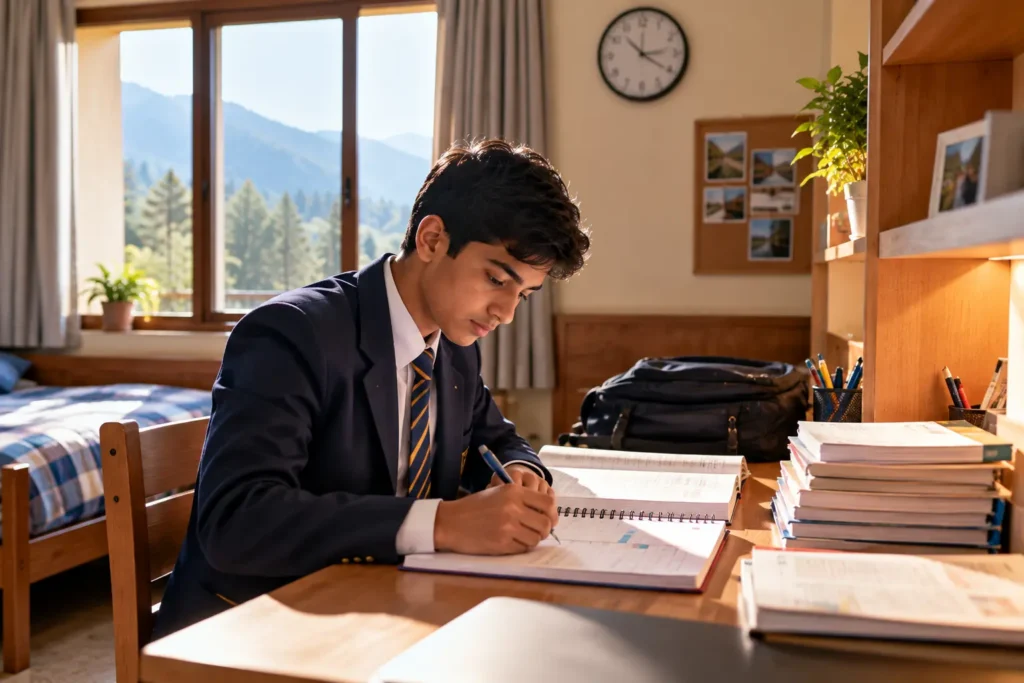
Time management is another area where students can learn through experience.
A school day can include several competing priorities. Students may have classes in the morning, homework later in the day, sports practice, club activities, meals, and personal time. Learning how to fit these activities into a schedule requires planning.
Student responsibility through campus life becomes particularly visible when children begin managing their own time.
For example, a student who spends too much time playing before completing homework may have to adjust their routine. Another student may discover that preparing school materials in advance makes the next morning easier.
These experiences help students understand that time is limited and that choices have consequences.
The goal is not to expect children to manage everything perfectly from the beginning. Younger students especially need guidance. The important part is gradually giving them more responsibility as they become ready for it.
Learning to Take Ownership of Decisions
Children make decisions every day, even when adults do not always notice them.
Which task should they complete first? Did they bring everything they need for class? Should they ask for help when they do not understand something? How should they respond when they disagree with a classmate?
Campus life provides many opportunities to practise these decisions.
When students make a poor choice, the experience can become a learning opportunity. A forgotten assignment, missed activity, or misplaced item may show them what they need to do differently next time.
This does not mean students should be left without support. Teachers and residential staff can help them understand what went wrong and how to handle a similar situation in the future.
The aim is to move gradually from adults making every decision for the child to students learning to make appropriate decisions themselves.
How Team Activities Build Responsibility
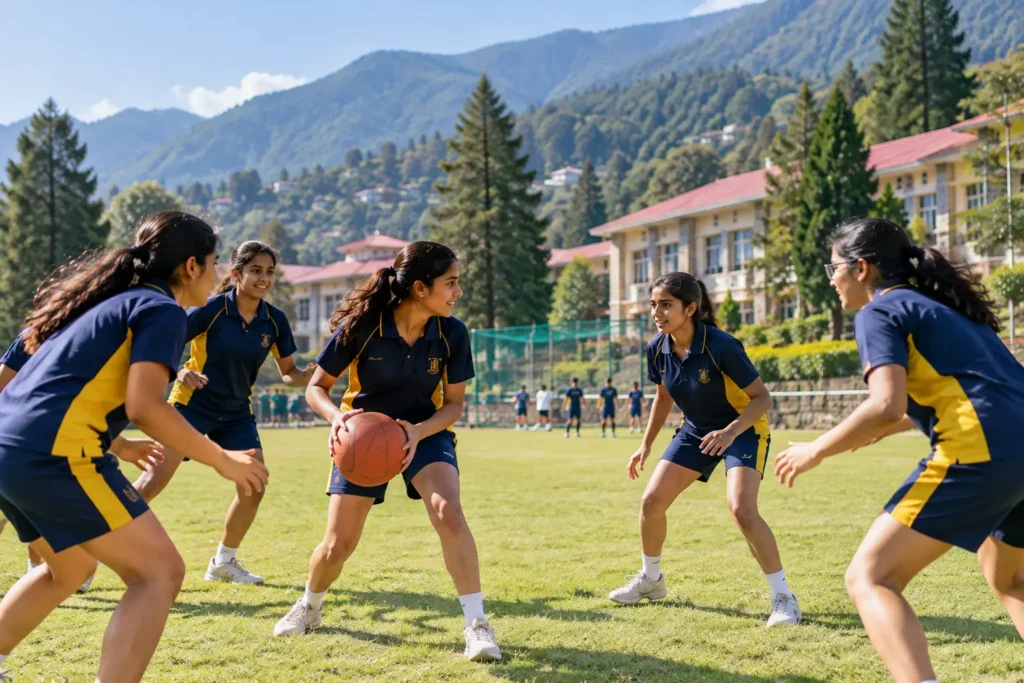
Sports and group activities offer another practical way to develop responsibility.
A team depends on its members. If one student does not attend practice, arrives late, or does not complete an assigned task, other members may be affected.
This creates a useful connection between individual actions and group outcomes.
The same principle applies to school clubs, group projects, house activities, competitions, cultural programmes, and school events. Students may be given different responsibilities, and they need to complete their part for the larger activity to work.
Through these experiences, students can learn:
– How to cooperate with others
– Why commitments matter
– How to communicate clearly
– How to accept feedback
– How to support teammates
– How to handle success and disappointment
These lessons are difficult to learn from a textbook alone because they depend on actual participation.
Leadership Opportunities That Develop Responsible Students
Leadership does not always mean becoming the school captain or student council president.
A student can practise leadership by taking responsibility for a classroom task, helping organise an event, leading a sports team, coordinating a house activity, or supporting younger students.
These opportunities teach students that leadership involves more than giving instructions. A student in a responsible position may have to listen to others, solve problems, communicate with teachers, and make decisions.
For example, a house captain organising a school activity may discover that not everyone agrees on how something should be done. The student then has to listen, discuss the issue, and find a practical solution.
Such situations can gradually strengthen communication, accountability, and decision-making.
Learning Responsibility Through Community Living
Residential education offers a different kind of learning because students share their daily environment with other people.
Living on campus means students need to consider how their actions affect classmates and roommates. Noise, cleanliness, shared resources, personal space, and common routines all require cooperation.
Students gradually learn that community living works better when everyone contributes.
They may learn to:
– Respect other people’s personal space
– Share common facilities
– Keep shared areas clean
– Follow community routines
– Listen to different viewpoints
– Resolve everyday disagreements respectfully
– Consider how their actions affect others
For a child who has always had parents nearby to solve small disagreements, these situations can initially feel unfamiliar. With appropriate adult guidance, however, they can become valuable opportunities to develop maturity.
How Teachers and House Parents Guide Students
Responsibility does not develop simply because a child is placed on a school campus. Adults still have an important role.
Teachers, house parents, coaches, and other staff members provide structure and guidance. They can explain expectations, supervise students, provide feedback, and step in when a situation requires adult support.
Good guidance also means allowing students to handle age-appropriate problems themselves.
If a student forgets a book, for example, an adult does not always need to solve the problem immediately. The student can be encouraged to think about what happened and decide how to prevent it next time.
This approach helps children understand that making mistakes is part of learning responsibility.
At the same time, expectations should be realistic. A younger student should not be expected to manage responsibilities meant for an older student. Responsibility should grow gradually with the child’s age, maturity, and abilities.
Small Responsibilities That Prepare Students for Adult Life
Many adult skills begin with surprisingly small habits developed during childhood.
A student who learns to organise school materials may later find it easier to organise work documents. A child who learns to manage a daily schedule may eventually become more comfortable planning university studies or professional commitments.
Campus experiences can help students practise skills such as:
– Decision-making
– Self-discipline
– Time management
– Problem-solving
– Accountability
– Communication
– Organisation
– Cooperation
Of course, attending a residential school does not automatically make every student responsible. Children develop at different rates, and their personalities and experiences are different.
What campus life can provide is a regular environment where students have opportunities to practise these skills.
Why Student Responsibility Through Campus Life Matters Beyond School
The value of student responsibility through campus life extends beyond the school years.
University students often have to manage their schedules, assignments, finances, relationships, and personal routines with less supervision. Later, professional life brings deadlines, teamwork, commitments, and decisions that require a degree of independence.
Students also develop these qualities through experiences that happen outside regular lessons. Activities, projects, teamwork, and everyday campus responsibilities give them opportunities to think independently and apply what they learn. Parents can also explore how learning beyond the classroom can help children develop independent thinking and practical skills.
Students who have already had opportunities to manage age-appropriate responsibilities may find these transitions more familiar.
The same applies to everyday personal life. Knowing how to organise tasks, communicate with others, solve small problems, and accept responsibility for mistakes can be useful in almost any situation.
For parents choosing a boarding or residential school, it is worth asking not only what students study in the classroom, but also what they are trusted to do outside it. The everyday responsibilities given to children can tell us a great deal about how a school prepares them for life beyond the campus.
Conclusion
Responsibility is built through practice.
When students manage their belongings, follow routines, organise their time, participate in teams, take on leadership roles, and live respectfully with others, they encounter situations that require them to think and act for themselves.
This is the real value of student responsibility through campus life. The lessons may begin with something as simple as remembering a notebook or arriving on time, but repeated experiences can help students become more organised, accountable, and independent.
For parents choosing a boarding or residential school, it is worth asking not only what students study in the classroom, but also what they are trusted to do outside it. The everyday responsibilities given to children can tell us a great deal about how a school prepares them for life beyond the campus.