The Vision and Core Values That Make Chinmaya Vidyalaya Nauni a Leading Boarding School in Himachal Pradesh
Choosing a boarding school is a decision that goes far beyond comparing academic results, campus facilities, or fee structures. Parents are also choosing an environment where their child will spend much of their formative years.
The right school should help students become capable learners, but it should also help them develop habits, values, confidence, responsibility, and respect for others. These qualities often influence a child’s life long after school.
This is where the educational approach of Chinmaya Vidyalaya Nauni becomes relevant. Located in Nauni, Solan, the school combines formal education with an emphasis on values, discipline, personal responsibility, and the overall development of students.
For parents exploring a boarding school in Himachal Pradesh, understanding the thinking behind a school’s education can be just as important as looking at its infrastructure.
The Vision Behind Chinmaya Vidyalaya Nauni

A school’s vision is reflected not only in what students study but also in the kind of people the school encourages them to become.
At Chinmaya Vidyalaya Nauni, education is viewed as more than the completion of a syllabus. Academic learning forms an important part of school life, but students also need opportunities to develop good habits, understand responsibility, work with others, and become more aware of their actions.
This approach is particularly relevant in a residential setting. When children live and learn within the same school community, everyday activities become part of their education.
Simple experiences such as following a routine, keeping personal belongings organised, cooperating with classmates, participating in school activities, and respecting shared spaces can gradually teach lessons that are difficult to learn from textbooks alone.
Why Value Based Education Matter in Boarding School Education
Parents often look at academic performance when comparing schools, and rightly so. However, academic ability is only one part of a child’s development.
A student may be academically capable but still need to learn how to manage time, deal with setbacks, communicate respectfully, or take responsibility for their decisions.
A values-based education gives these areas a place within everyday school life.
For a boarding student, this can be especially meaningful because there are many opportunities to practise these qualities. Students interact with teachers and peers throughout the day, follow common routines, take part in group activities, and learn to manage responsibilities away from home.
Over time, these experiences can contribute to greater maturity and self-awareness.
Academic Learning Alongside Character Development
A good education should not force parents to choose between academics and character development. Both can exist together.
For students at a CBSE boarding school in Himachal Pradesh, classroom learning provides the academic foundation needed for future studies. At the same time, the school environment can encourage students to become organised, curious, disciplined, and willing to learn from their mistakes.
Character development does not necessarily require a separate lesson every day.
A student learning to complete an assignment on time is also learning about responsibility. A student working on a group project is learning cooperation. A student accepting feedback from a teacher is learning how to improve.
These small experiences can have a lasting influence because they connect values with real situations.
Discipline, Responsibility and Independence
Boarding school life naturally requires students to take greater responsibility for their daily routines.
At home, parents may remind children about homework, belongings, schedules, or other responsibilities. In a residential school, students gradually learn to manage many of these things themselves.
This does not mean children are expected to handle everything alone. Teachers, wardens, and other members of the school community continue to provide guidance and support.
The important part is the gradual shift from being reminded to taking ownership.
A student who learns to prepare for the next day, organise their belongings, follow a routine, and complete responsibilities on time is developing habits that can be useful in higher education and professional life as well.
The Role of Indian Culture and Values in Education
Education is also connected to the values and cultural understanding that students carry with them.
For many parents, preserving a connection with Indian traditions while providing modern academic education is an important consideration when selecting a school.
The Chinmaya educational approach places importance on understanding Indian cultural and philosophical values alongside formal education. The purpose is not simply to teach traditions but to encourage students to think about values such as respect, responsibility, self-discipline, compassion, and service.
When children understand the reasoning behind values rather than simply being told to follow rules, they have a better opportunity to make those values part of their own behaviour.
Holistic Development Beyond the Classroom
Children learn in many different ways.
A classroom can develop knowledge and academic skills, but activities outside the classroom can help students discover interests, develop confidence, and learn how to work with others.
Sports, cultural activities, creative pursuits, group responsibilities, and other school experiences can provide opportunities for students to face challenges in different settings.
For example, a student who participates in a team activity learns that individual effort matters, but so does cooperation. A student who takes part in a performance may become more comfortable speaking or performing in front of others.
These experiences add another dimension to formal academic education.
How Residential Life Can Shape a Child’s Personality
One of the biggest differences between a day school and a residential school in Himachal Pradesh is the amount of time students spend within the school community.
Boarding life gives children the opportunity to develop relationships, handle everyday responsibilities, and experience situations that require cooperation and adjustment.
Living with students from different backgrounds can also teach children to appreciate differences. They may encounter different opinions, habits, interests, and ways of thinking.
Learning how to share space, resolve disagreements respectfully, help others, and adjust to group routines can contribute to social and emotional growth.
Of course, every child responds differently to boarding life. That is why parents should consider their child’s personality, readiness, interests, and comfort level before making a decision.
What Parents Should Look for When Choosing a Boarding School in Himachal Pradesh
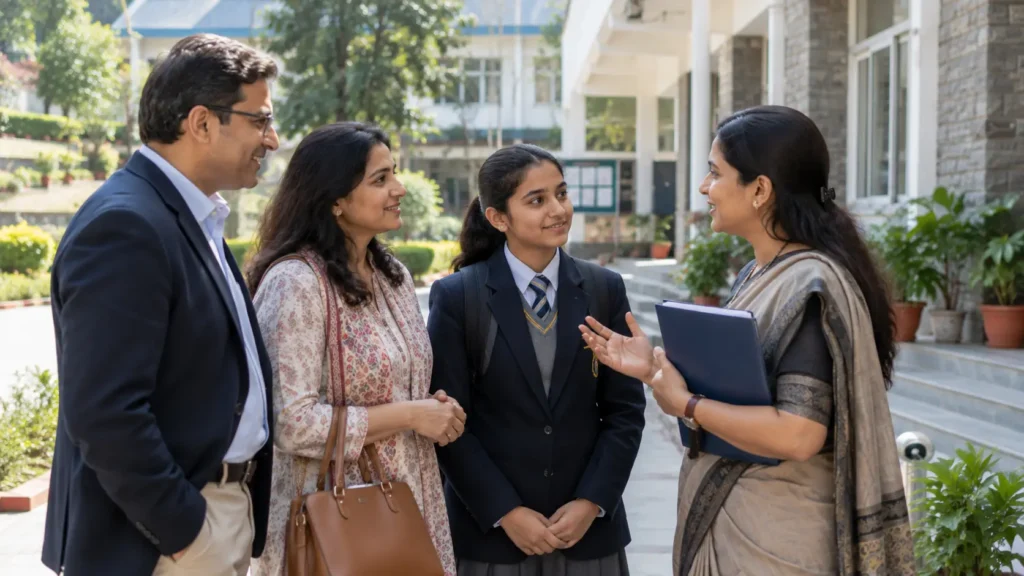
There are several things parents should consider when comparing boarding schools.
1. Educational Approach
Understand how the school approaches academics and whether its teaching philosophy matches your expectations for your child.
2. Values and Discipline
Look beyond written statements. Try to understand how values and discipline are reflected in everyday student life.
3. Residential Environment
Ask about routines, student support, supervision, interaction between students and teachers, and how the school helps children adjust to boarding life.
4. Opportunities Beyond Academics
Find out whether students have opportunities to participate in sports, cultural activities, creative work, and other areas that can support broader development.
5. Communication with Parents
Parents should have a clear understanding of how the school communicates important information and keeps families connected with their child’s progress.
6. Location and Environment
The surrounding environment is another practical consideration. Himachal Pradesh offers a different setting from crowded urban areas, and parents may want to consider whether the location suits their child’s needs.
Why the Educational Approach at Chinmaya Vidyalaya Nauni Can Appeal to Parents
Every family has different priorities when choosing a school. Some may place greater emphasis on academics, while others may be equally concerned about discipline, values, independence, and overall personality development.
Chinmaya Vidyalaya Nauni’s approach brings these areas together rather than treating them as separate parts of education.
For parents looking at a boarding school in Solan, the school’s emphasis on education with values can be an important factor to consider.
The objective is not simply to prepare students for examinations. School years also provide an opportunity for children to develop habits and attitudes that can influence how they approach challenges, relationships, responsibilities, and future opportunities.
That is why the culture of a school matters.
Education That Extends Beyond the School Years
A student’s school experience does not end with the final examination.
The habits developed during these years can continue into college, work, and personal life. Learning to manage time, respect others, take responsibility, remain disciplined, and approach challenges with a positive attitude can be useful in almost any situation.
For parents, this is one of the important questions to ask when evaluating a school:
What kind of person will my child become while studying here?
Academic education provides knowledge. A strong school environment can also help students understand how to use that knowledge responsibly.
Conclusion
Choosing a boarding school in Himachal Pradesh requires careful consideration. Parents need to look at academics, residential facilities, student support, activities, location, and several other practical factors.
But there is another question worth asking: What values does the school want students to carry with them?
Chinmaya Vidyalaya Nauni takes an approach in which education and values are closely connected. Through academics, daily routines, residential life, cultural understanding, and opportunities for personal growth, students can experience education as something broader than classroom learning.
For families considering a boarding school in Himachal Pradesh, understanding this educational philosophy can help them decide whether the school’s approach is a good fit for their child.
The right school is not simply the one with the longest list of facilities. It is the one whose environment, values, and educational approach align with the kind of future parents hope to build for their children.
Frequently Asked Questions
Q1: What should parents look for in a boarding school in Himachal Pradesh?
Parents should consider academics, teaching approach, residential facilities, student safety and support, discipline, extracurricular opportunities, communication with parents, location, and the school’s overall educational philosophy.
Q2: Why are values important in boarding school education?
Values such as responsibility, discipline, respect, cooperation, and honesty can help students handle everyday situations more effectively. Boarding life provides many opportunities for students to practise these qualities.
Q3: What is the benefit of residential education?
Residential education gives students opportunities to develop independence, manage daily responsibilities, interact with peers, and become comfortable working within a community.
Q4: Is Chinmaya Vidyalaya Nauni a CBSE boarding school?
Chinmaya Vidyalaya Nauni provides CBSE-based school education along with an emphasis on values and holistic development. Parents should contact the school directly for the latest information about classes, admissions, and curriculum details.
Q5: Why consider a boarding school in Solan?
Solan offers a hill environment within Himachal Pradesh and is home to several educational institutions. Parents considering a boarding school in Solan should compare each school’s academics, residential environment, student support, activities, and educational philosophy.
Q6: How should parents decide if boarding school is right for their child?
Parents should consider their child’s age, personality, independence, interests, ability to adjust to a residential environment, and readiness to spend time away from home. Visiting the school and speaking with the admissions team can also help families make a more informed decision.