Learning Beyond the Classroom: Building Independent Thinkers at Chinmaya Vidyalaya Nauni
Education today involves much more than completing a syllabus and preparing for examinations. Students also need to learn how to look at a situation carefully, ask questions, make decisions, work with others, and find sensible solutions when things do not go as planned.
These abilities become useful in almost every part of life. They help students approach academic challenges with greater confidence and prepare them for situations they may face outside school.
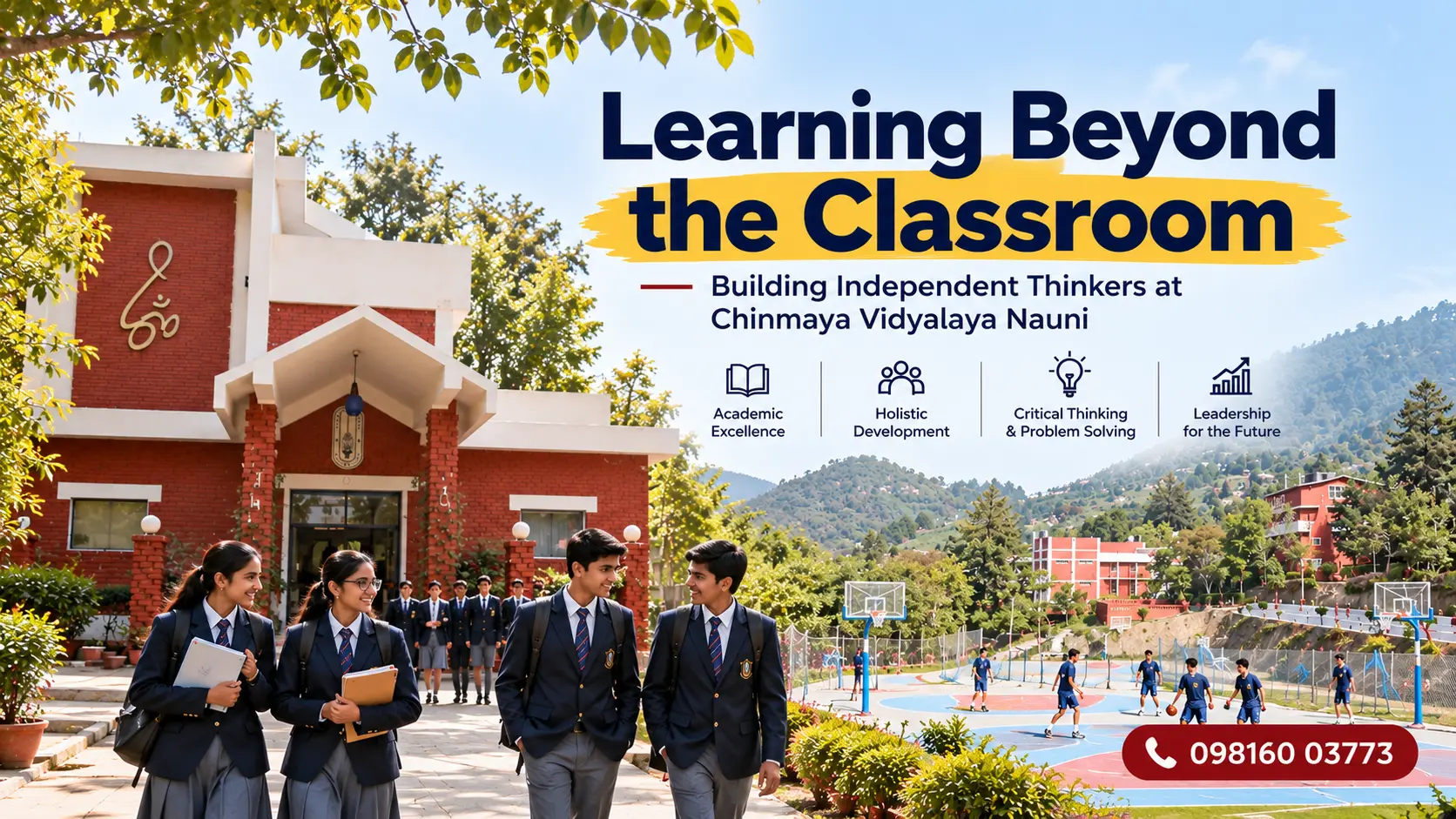
At Chinmaya Vidyalaya Nauni, learning can extend beyond textbooks through classroom discussions, interdisciplinary activities, technology, sports, creative pursuits, leadership opportunities, and community participation. These experiences give students different ways to learn, participate, and develop their understanding. For parents searching for a **boarding school near Shimla**, the learning environment and opportunities available beyond academics can be important factors to consider.
More Than Knowing the Answer: Learning to Think
Knowing information is important, but students also need to understand how to use it.
Critical thinking encourages students to look at information carefully instead of accepting every answer immediately. It involves asking questions, comparing ideas, understanding reasons, and considering different possibilities before concluding.
For example, when discussing a topic in class, students can be encouraged to explain why they agree or disagree with an idea. This changes the discussion from simply finding an answer to understanding how that answer was reached.
Asking Better Questions
Good questions can lead to better understanding.
Teachers can encourage students to ask:
– Why did this happen?
– Is there another explanation?
– What evidence supports this idea?
– What might happen if the situation changed?
– Can we look at the issue from another point of view?
Such questions encourage students to explore a topic rather than simply memorise information.
Looking at a Problem from Different Angles
A problem may have more than one possible solution.
Students can be encouraged to consider different approaches, compare their advantages and disadvantages, and explain why they prefer one option.
This habit can help them become more careful when making decisions.
—
From Challenges to Solutions
Problem-solving is closely connected with independent thinking.
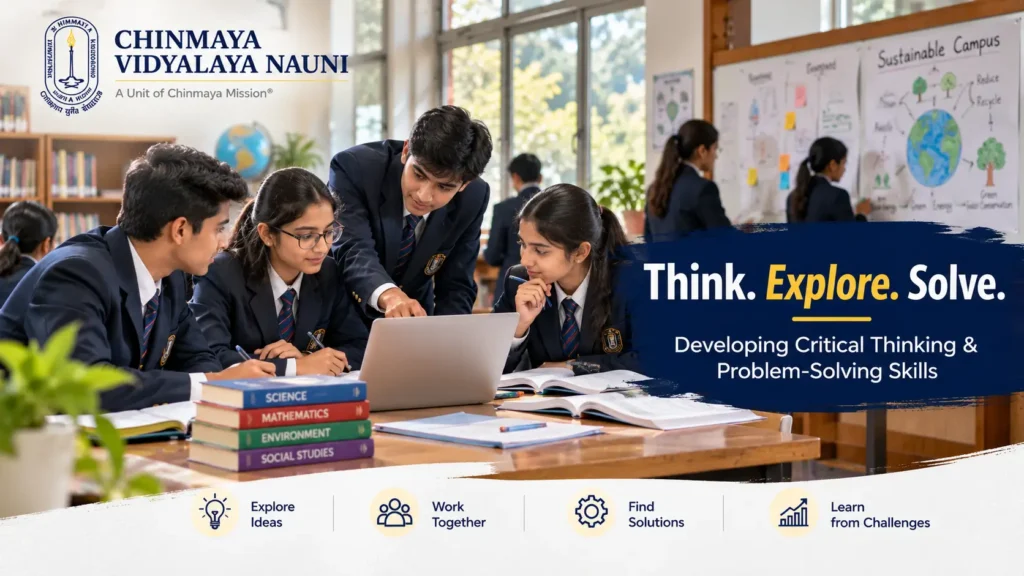
When students face a challenge, they need to understand what is happening before deciding what to do. They may need to collect information, identify possible causes, consider alternatives, and then choose an appropriate course of action.
Learning How to Approach Difficult Situations
A useful approach to problem-solving can involve several simple steps:
1. Understand the situation.
2. Identify the main difficulty.
3. Think about possible solutions.
4. Consider the likely results.
5. Choose an approach.
6. Review what happened.
Students can use this process while working on academic projects, group assignments, competitions, or everyday situations.
Making Decisions with Confidence
Good decision-making does not mean always making the perfect choice.
Students also need to understand that mistakes can provide valuable lessons. When they are encouraged to review what went wrong and think about what they could do differently, they can gradually become more comfortable dealing with challenges.
Connecting Different Subjects Through Learning
Real-life situations rarely fit neatly into a single school subject.
An environmental project, for example, may involve science, mathematics, geography, language, and social studies. Students may need to research information, organise data, discuss findings, and present their conclusions.
When Subjects Come Together
Interdisciplinary activities can help students see connections between different areas of knowledge.
Instead of learning each subject in isolation, students can understand how ideas from one subject can support their understanding of another.
This can make learning more practical and meaningful.
Turning Technology into a Learning Tool
Technology has become an important part of education.
Students can use digital tools for research, presentations, collaboration, creative projects, and accessing educational resources.
At the same time, they need to learn how to use technology responsibly. Being able to find information is only one part of digital learning. Students should also learn how to question the reliability of information, compare sources, and use online resources thoughtfully.
A Classroom Where Questions Are Welcome
Students often learn more when they are comfortable expressing their thoughts and asking questions.
A supportive classroom can give students the confidence to participate in discussions, explain their reasoning, and listen to different opinions.
Learning Through Discussion
Classroom discussions can introduce students to ideas they may not have considered themselves.
A teacher might ask students to defend an opinion, compare two viewpoints, or suggest an alternative solution. Listening to classmates can also help students understand that people may approach the same issue differently.
The aim is not always to make everyone agree. It is to teach students how to listen, reason, and communicate respectfully.
Taking a Second Look at Our Own Work
Reflection is another useful part of learning.
After completing an assignment or activity, students can ask themselves:
– What did I understand well?
– What was difficult?
– Where did I make a mistake?
– What helped me complete the task?
– What would I do differently next time?
Taking time to reflect can help students understand their own strengths and areas that need improvement.
Lessons That Happen Outside the Classroom
Some of the most useful learning experiences happen when students participate in activities beyond regular lessons.
Sports, art, drama, competitions, clubs, and school events can give students opportunities to cooperate, take responsibility, manage time, and respond to unexpected situations.
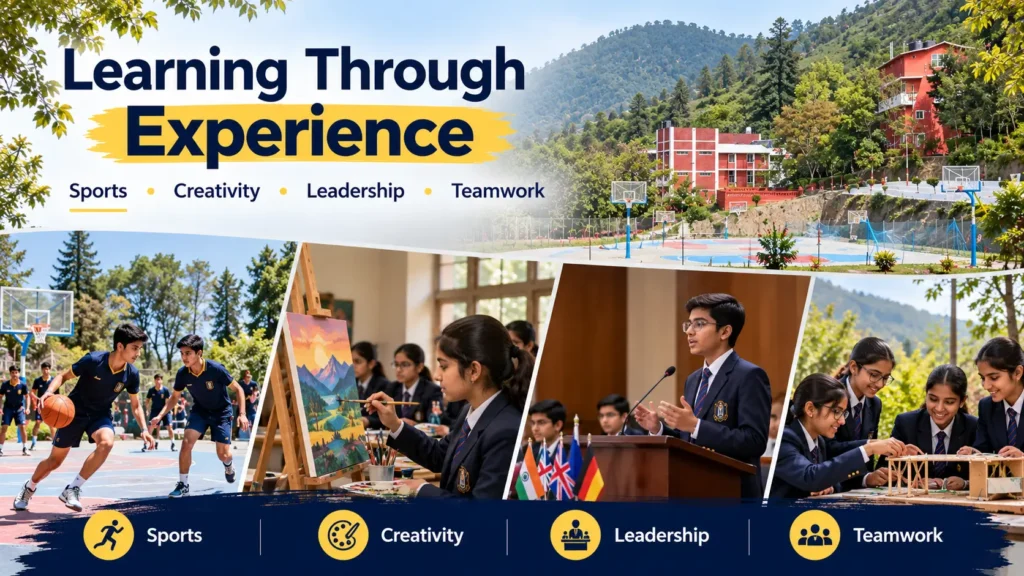
What Sports Teach About Decisions and Teamwork
Sports require students to make decisions while situations are changing.
A player may need to decide whether to pass, defend, change position, or try a different approach. Team members also have to communicate and work towards a common goal.
Sports can therefore teach lessons about:
– Teamwork
– Discipline
– Decision-making
– Patience
– Responsibility
– Handling success and disappointment
These lessons can be useful well beyond the playing field.
Finding Confidence Through Art and Drama
Creative activities provide students with another way to express their thoughts.
Drama may require students to understand characters, remember sequences, communicate with others, and perform in front of an audience.
Art allows students to experiment with ideas and communicate through visual expression.
Such activities can encourage creativity while also helping students become more comfortable expressing themselves.
Preparing Students to Understand a Wider World
Students are growing up in a world where people, ideas, businesses, and cultures are increasingly connected.
Understanding different perspectives can help young people communicate more effectively and approach unfamiliar situations with an open mind.
Seeing Different Perspectives Through MUN
Model United Nations can introduce students to international issues and public discussion.
Students participating in MUN may research a country, study an issue, prepare arguments, and present their views during a discussion.
The experience can involve research, communication, listening, preparation, and teamwork.
More importantly, students get an opportunity to understand that different people and countries can have different interests and viewpoints.
Learning Responsibility Through Community Participation
Community activities can help students understand the importance of contributing to the people and environment around them.
When students participate in community-oriented activities, they can encounter situations outside their usual routines. These experiences may encourage them to think about cooperation, responsibility, kindness, and the impact of individual actions.
Why These Experiences Matter in a Student’s Future
Critical thinking and problem-solving are not skills that students need only for examinations.
They can become useful when choosing higher-education options, working on projects, handling disagreements, managing responsibilities, or dealing with unfamiliar situations.
A student who has learned to ask questions, examine information, and consider different solutions may be better prepared to approach new challenges with confidence.
For parents looking for boarding school near Shimla, it can therefore be useful to look beyond academic results and consider the wider learning environment offered by a school.
Creating Learners Who Can Think for Themselves
A meaningful education gives students opportunities to explore ideas instead of simply receiving information.
At Chinmaya Vidyalaya Nauni, classroom learning can be complemented by technology, interdisciplinary activities, sports, arts, leadership opportunities, MUN, and community participation.
Each experience can offer a different lesson. A sports match can teach teamwork. A classroom discussion can encourage questioning. A project can require students to find a solution. A community activity can introduce them to responsibility.
Together, these experiences can help students become more independent learners who are willing to think, participate, learn from mistakes, and take responsibility for their decisions.
Final Thoughts
Preparing students for the future is not only about teaching them what is already known. It is also about helping them develop the confidence to ask questions, understand problems, consider different ideas, and find their own way forward.
Critical thinking and problem-solving develop gradually through everyday learning experiences. When students are given opportunities to participate, question, create, collaborate, and reflect, these abilities can become part of how they approach the world.
For families considering a boarding school near Shimla, the combination of academics, activities, student participation, and opportunities for independent thinking can be an important part of choosing the right school. Chinmaya Vidyalaya Nauni aims to provide students with opportunities to learn not only from their books, but also from experiences, challenges, teamwork, and the world around them.