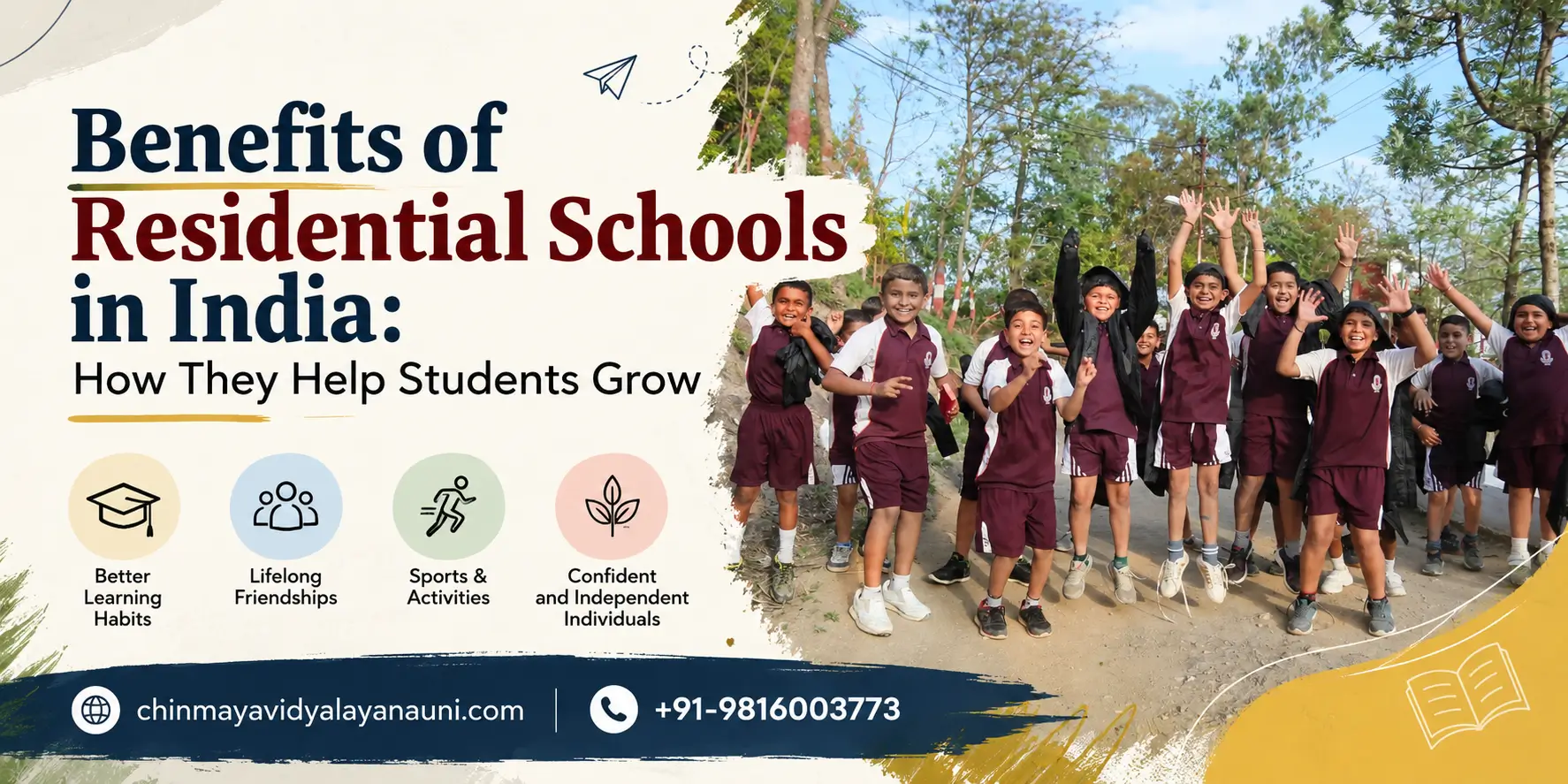
Benefits of Residential Schools in India: How They Help Students Grow
Choosing a school is an important decision for parents. While day schools work well for many children, some families prefer residential schools because they offer students a chance to live, study, play, and grow in the same environment.
Residential schools in India are not only about academics. Students spend much of their time on campus, which gives them opportunities to learn practical skills, interact with others, take part in activities, and become more responsible for their daily routines.
For parents considering residential education, it is useful to understand how this type of schooling can influence a child’s academic, social, and personal growth.
Understanding Residential School Education
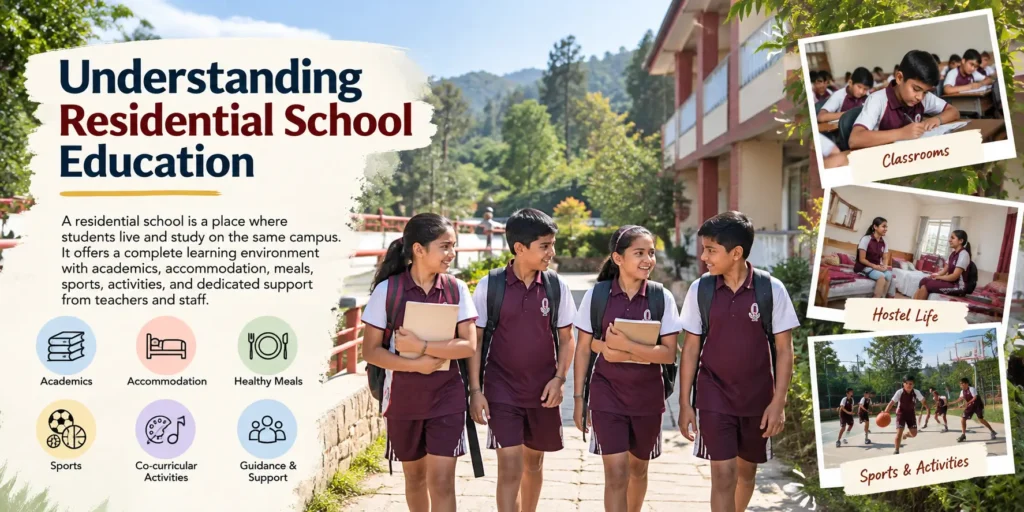
A residential school is an educational institution where students live on the school campus during the academic session. In addition to classrooms, these schools generally provide accommodation, dining facilities, sports areas, activity spaces, study areas, and supervised residential facilities.
Students follow a daily routine that usually includes classes, study hours, meals, sports, extracurricular activities, and time for relaxation.
Living away from home can be a major change for a child. However, with proper support from teachers, wardens, and other staff members, students can gradually become comfortable with their new surroundings.
Why Do Parents Choose Residential Schools?
There are several reasons why parents consider residential education. Some are looking for stronger academic support, while others want their children to become more independent and confident.
Here are some of the important benefits of residential schooling.
1. Children Learn to Manage Things on Their Own
One of the biggest changes students experience in a residential school is learning to handle everyday responsibilities.
They may need to organise their school materials, keep track of their belongings, prepare for classes, and follow their daily routine. These simple tasks help children become less dependent on parents for every small decision.
Over time, students learn how to manage situations on their own while still having teachers and staff available when they need help.
2. A Daily Routine Helps Students Stay Organised
Residential schools generally follow a planned daily schedule. Students have specific timings for classes, meals, study periods, sports, activities, and rest.
Following such a routine can help students understand how to use their time properly. They learn that completing schoolwork, attending activities, getting enough rest, and meeting responsibilities all require planning.
These habits can also be useful later in college and professional life.
3. Learning Happens Beyond the Classroom
School education is not limited to textbooks and examinations.
Residential schools give students more opportunities to participate in sports, music, art, debates, cultural programmes, clubs, competitions, and other activities. Since students remain on campus, they can often take part in activities after regular classes.
These experiences allow children to discover interests that may not become visible through classroom learning alone.
4. Living With Other Students Builds Social Skills
Residential life means spending time with students from different backgrounds, regions, and family environments.
Children learn to share spaces, communicate with others, work as a team, and deal with differences of opinion. They may also form friendships that continue for many years.
Living together teaches an important lesson: people may have different habits and opinions, but they still need to respect and cooperate with one another.
5. More Time for Sports and Other Interests
For many students, residential schooling provides greater access to sports and extracurricular activities.
Depending on the school, students may have opportunities to participate in football, cricket, basketball, athletics, swimming, yoga, music, dance, theatre, art, public speaking, and other activities.
Regular participation can help students develop discipline and teamwork while also giving them a healthy break from academic work.
6. A Focused Environment for Studies
Residential schools provide students with a dedicated academic environment.
Scheduled study periods, access to teachers, libraries, and academic support can make it easier for students to maintain a regular study routine. Students can also discuss their difficulties with teachers and seek help when they do not understand a particular topic.
The environment can be particularly useful for students who benefit from having a fixed schedule for their studies.
7. Students Become More Responsible
When children live away from home, they gradually understand that their actions have consequences.
They learn to look after their belongings, follow school rules, arrive on time, complete assignments, and contribute to the residential community.
Responsibility does not develop overnight. It grows through regular experiences, and residential life gives students many opportunities to practise it.
8. Residential Life Can Improve Confidence
Moving away from home can initially feel difficult for some children. But as students become familiar with their surroundings, they often become more comfortable handling new situations.
Taking part in competitions, speaking in front of others, making new friends, completing responsibilities, and solving everyday problems can help students become more confident.
The aim is not to make children independent too quickly, but to give them the right support as they gradually become more self-reliant.
What Should Parents Look for in a Residential School?
Choosing a residential school requires more than comparing academic results or facilities. Parents should look at the overall environment in which their child will live and study.
Safety and Student Supervision
Parents should understand how the school manages student safety and supervision.
It is worth asking about residential staff, security arrangements, medical support, emergency procedures, visitor policies, and supervision during different parts of the day.
Academic Guidance
Look at the school’s teaching approach, class sizes, teacher availability, academic support, examination results, and opportunities for students who need additional help.
A good residential school should provide students with support rather than focusing only on examination scores.
Hostel and Residential Facilities
The residential environment becomes a major part of a student’s school life.
Parents should consider hostel rooms, cleanliness, food, sanitation, common areas, study spaces, laundry arrangements, and the overall condition of the boarding facilities.
If possible, visiting the campus can give parents a much better idea of the living environment.
Student Health and Emotional Wellbeing
Children living away from home need emotional as well as academic support.
Parents should find out how the school handles homesickness, stress, health concerns, personal difficulties, and communication between students and staff.
A supportive residential environment should make students feel comfortable approaching a trusted adult when they have a problem.
Sports, Clubs and Activities
Parents should also look at what students can do outside the classroom.
Sports grounds, music, art, clubs, competitions, outdoor activities, and cultural programmes can make residential life more engaging and help students explore different interests.
Communication With Parents
Living away from home does not mean losing regular contact with family. Parents should understand the school’s rules regarding phone calls, visits, parent meetings, academic updates, and communication during emergencies.
Regular communication can make the transition easier for both parents and children.
Is Residential Schooling Suitable for Every Child?
Residential education can be a good choice for many students, but it is not automatically the right option for every child. Some children enjoy living with friends, following a routine, and taking part in campus activities. Others may find it difficult to stay away from their families, especially during the initial months.
A child’s age, personality, level of independence, academic needs, interests, and comfort with residential life should all be considered before making a decision. Parents should also involve the child in the discussion. Understanding how the child feels about living away from home can make the transition much smoother.
How Residential Schools Contribute to Student Growth
The main advantage of residential education is that learning continues throughout the day. A student may learn mathematics in the classroom, teamwork on the sports field, responsibility in the hostel, communication through group activities, and leadership while participating in school events.
For parents researching top CBSE boarding schools in India, it is also useful to look closely at how a school combines academics with residential life, sports, activities, and student support. These everyday experiences can shape a child’s habits and personality in ways that are difficult to measure through examination marks alone. Residential schooling can therefore offer a combination of academics, activities, friendships, responsibilities, and everyday experiences.
Final Thoughts
Residential schools in India offer students an environment where education and everyday life come together. With a structured routine, academic guidance, sports, activities, and opportunities to live with other students, children can develop skills that extend beyond their textbooks. However, choosing a residential school should be a thoughtful decision. Parents should consider the school’s academic approach, residential facilities, safety measures, activities, student support, and communication policies before making a choice. Most importantly, the school should be a place where children feel safe, supported, and encouraged to learn at their own pace. For the right child and the right school environment, residential education can become an important part of growing into a confident, responsible, and well-rounded individual.