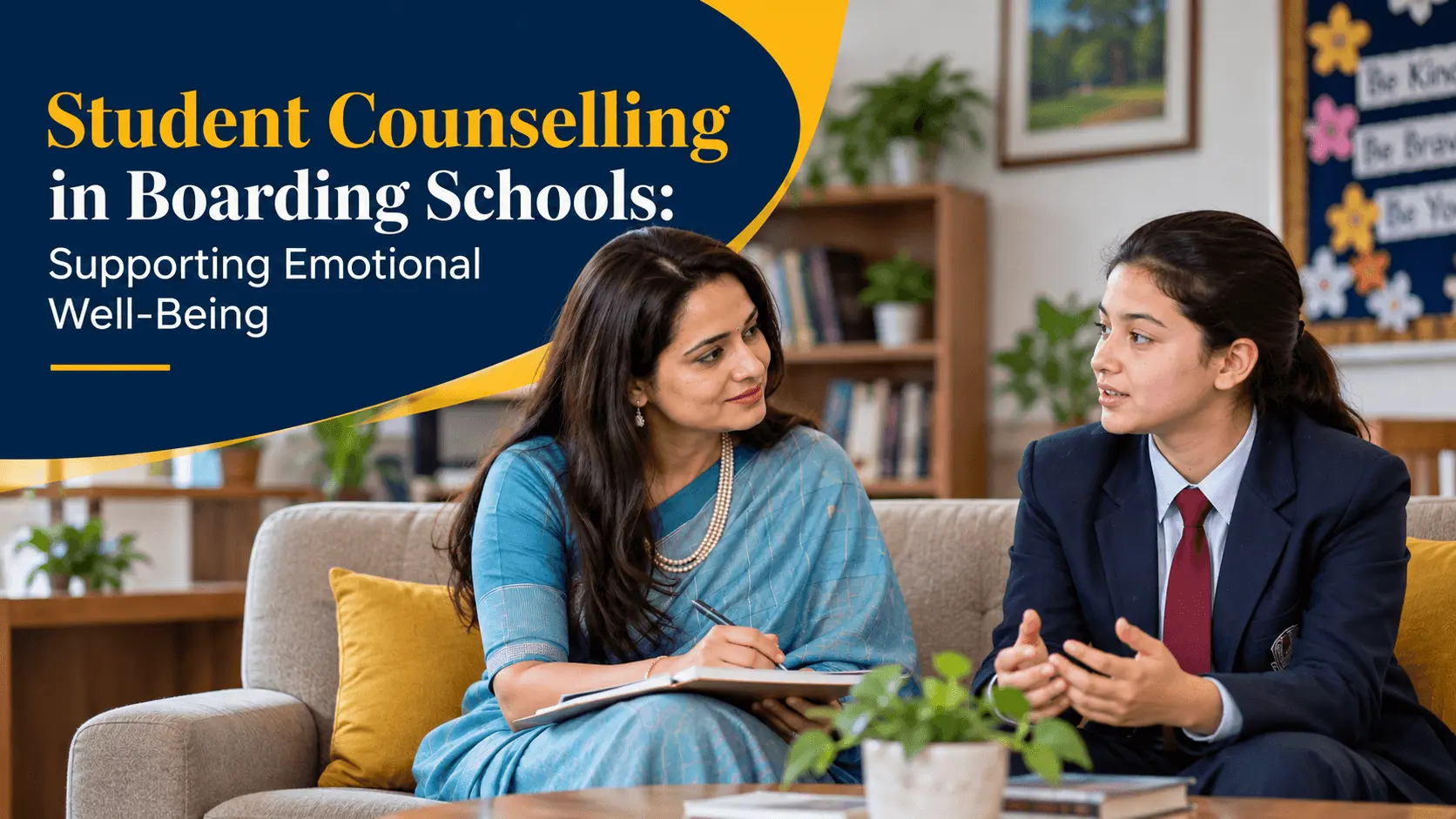
Student Counselling in Boarding Schools: Supporting Emotional Well-Being
Choosing a boarding school is a big decision for parents. There are many things to consider—academics, teachers, campus facilities, sports, activities, safety, and the overall environment. But there is another part of school life that sometimes receives less attention: how a school supports a child’s emotional well-being.
When children live at school, they are away from their usual family environment for much of the year. They have to adjust to new routines, make friends, manage their studies, follow schedules, and handle everyday situations on their own. For some students, this transition happens easily. Others may take more time.
This is where counselling and personal guidance can make a real difference.
A school counsellor can give students a comfortable place to talk about things that may be difficult to discuss with parents, teachers, or friends. The purpose is not to label a student or assume that something is wrong. Sometimes, a child simply needs someone who will listen without rushing to judge or give an immediate solution.
For a residential school such as Chinmaya Vidyalaya Nauni, supporting students as individuals is an important part of creating a positive boarding experience.

Why Emotional Support Matters in a Boarding School
The boarding school experience is different from attending a day school. Students are not only studying together; they are also sharing their daily routines, activities, meals, games, and living environment.
That experience can help children become independent and confident. At the same time, it can bring moments when they feel homesick, stressed, lonely, or unsure about how to deal with a particular situation.
Having someone available for guidance can make these moments easier to handle.
Adjusting to Life Away From Home
The first few weeks can be an important period for a student joining a boarding school. A child may miss home-cooked meals, family conversations, familiar surroundings, or simply having parents nearby.
Homesickness does not mean that a student is unable to cope with boarding life. It can simply be part of the adjustment process.
With encouragement from teachers, house staff, friends, and counsellors, students can gradually become comfortable with their new surroundings. They begin to develop their own routines, form friendships, and feel more settled.
Dealing With Academic Pressure
School life comes with its own expectations. Tests, examinations, homework, projects, competitions, and the desire to perform well can sometimes become overwhelming.
Some students may openly talk about academic pressure. Others may become quiet, lose interest in activities, or worry excessively about their performance.
Counselling can help students step back and understand what is causing the pressure. Instead of focusing only on marks, they can learn to organise their work, manage their time, and approach challenges more calmly.
Developing Confidence and Emotional Resilience
Every student experiences disappointment at some point. It could be a poor examination result, losing a sports competition, having an argument with a friend, or not being selected for an activity.
These experiences are a normal part of growing up.
What matters is how students learn to respond to them. Support and guidance can help children understand that one setback does not define their ability or future.
What Does a School Counsellor Actually Do?
Many people associate counselling only with serious emotional problems. In a school environment, however, counselling can cover a much wider range of situations.
A counsellor may simply listen to a student’s concerns, ask questions, help the student look at a situation differently, or suggest practical ways to deal with a challenge.
The aim is to help the student develop the ability to handle situations more effectively.
A Safe Place to Talk
Students do not always want an immediate solution. Sometimes they want to explain what happened and feel that someone genuinely listened to them.
A counselling conversation can provide that space.
Helping Students Understand Their Feelings
Children and teenagers are still learning how to understand and express emotions. They may know that they are upset or frustrated without knowing exactly why.
A counsellor can help students identify what they are feeling and think about possible ways of dealing with it.
Supporting Better Decision-Making
As students grow older, they make more decisions independently. Guidance can help them consider the consequences of their choices rather than reacting only to the situation in front of them.
This can be particularly useful when dealing with friendships, academic decisions, disagreements, or other personal situations.
What Kind of Counselling Support Can Students Receive?
Every student’s needs are different, so counselling cannot follow exactly the same approach for everyone.
Depending on the school and the student’s situation, support may include several areas.
Individual Counselling
One-to-one conversations allow a student to discuss a personal concern in a more comfortable setting.
The conversation may be about something small that has been bothering the student or a concern that has continued for some time.
Academic Guidance
A student who is struggling with studies may not always need more hours of studying. Sometimes the real issue is poor time management, lack of confidence, difficulty concentrating, or anxiety about examinations.
Understanding the actual problem can help identify a more useful approach.
Social and Friendship Concerns
Friendships are an important part of boarding school life. Students spend considerable time with their peers, and disagreements are bound to happen.
Counselling can help students understand different viewpoints, communicate more clearly, and deal with conflicts in a constructive manner.
Personal Development
Counselling can also be about growth rather than problems.
Students can use guidance to work on confidence, communication, decision-making, self-awareness, and other skills that can benefit them well beyond school.
When Might a Student Need Counselling?
There is no fixed list of reasons why a student should speak with a counsellor. Every child is different.
However, some situations are fairly common in residential schools.
Homesickness
A student may miss home, family members, or their familiar surroundings. Talking about these feelings can help the child understand that homesickness is something they can gradually work through.
Examination and Academic Stress
Important examinations can create pressure, particularly when students place very high expectations on themselves.
A conversation with a counsellor can help students put academic challenges into perspective and develop healthier ways to manage pressure.
Friendship Problems
A disagreement with a close friend can feel extremely important to a young person. What may appear minor to an adult can be a genuine source of distress for a student.
Having an opportunity to talk through the situation can help the student see possible solutions.
Changes in Behaviour or Mood
Parents and teachers may notice when a normally active student becomes unusually quiet or when a child who generally participates in activities suddenly withdraws.
A change does not automatically mean that there is a serious concern. Still, it can be a reason to check in with the student and understand what is happening.
Lack of Confidence
Some students compare themselves with others and begin to doubt their own abilities.
Guidance can help them recognise their strengths and understand that every student develops differently.
How Can Students Reach a Counsellor?
A counselling system works best when students know how to access it and feel comfortable asking for help.
Students Can Ask for Support
Students should be encouraged to speak up when something is bothering them. Asking for help should not be treated as a sign of weakness.
In fact, recognising that you need guidance can be a sign of maturity.
Teachers Can Guide Students
Teachers spend a great deal of time with students and may notice changes that a child does not openly discuss.
When a teacher believes that a student could benefit from additional support, they can guide the student towards the appropriate person.
Residential Staff Can Play a Role
House parents and residential staff are also closely involved in the day-to-day lives of boarding students. They may be among the first adults to notice that a student is struggling with adjustment, friendships, or routine.
Their observations can help ensure that students receive support when required.
Is Counselling Confidential?
Confidentiality is an important part of building trust between a student and a counsellor.
A student should understand what happens when they share something personal. Schools should have clear policies explaining how counselling information is handled and when information may need to be shared.
Building Trust With Students
If students believe that everything they say will immediately be passed on to other people, they may hesitate to ask for help.
A respectful counselling environment helps students feel more comfortable discussing their concerns.
When Parents May Need to Be Informed
There are situations where parents or appropriate school authorities may need to be involved, particularly when there is a serious concern about a student’s safety or well-being.
This is why parents should understand the school’s counselling, safeguarding, and communication policies before admission.
What Should Parents Ask About Counselling Before Choosing a Boarding School?
Parents usually have many questions before selecting a residential school. Along with asking about academics and facilities, it is worth asking how the school looks after students emotionally.
Is Counselling Support Available?
Parents can ask whether the school has access to trained counselling professionals and how students can contact them.
How Does the School Handle Student Concerns?
It can be useful to understand how teachers, house staff, counsellors, and school leadership work together when a student needs additional support.
How Are Parents Kept Informed?
Parents should know how the school communicates when a concern requires their involvement.
Open and appropriate communication can make it easier for families and schools to work together.
Does the School Focus on More Than Academics?
A student’s education is not limited to examination results. Confidence, discipline, communication, responsibility, relationships, and decision-making also develop during school years.
A balanced boarding environment should give attention to these areas as well.
Supporting the Whole Student at Chinmaya Vidyalaya Nauni
A residential school provides children with an environment where learning continues outside the classroom. Daily routines, sports, activities, interactions with classmates, and responsibilities within the school community can all contribute to a student’s development.
At Chinmaya Vidyalaya Nauni, the residential experience can give students opportunities to develop independence while remaining part of a structured and supportive school community.
Academic Growth Alongside Personal Development
Good education is not only about completing a syllabus. Students also need opportunities to discover their interests, understand their strengths, learn from mistakes, and become comfortable taking responsibility.
Learning Discipline and Responsibility
Boarding life naturally introduces students to routines and shared responsibilities. Over time, these experiences can help children become more organised and accountable for their actions.
Becoming More Independent
For many students, boarding school is one of their first experiences of spending an extended period away from their families.
With the right guidance, this can help them learn how to manage their belongings, routines, relationships, and everyday decisions more independently.
Creating a Caring School Environment
Counselling is only one part of student well-being. A student’s overall experience is also shaped by teachers, friends, residential staff, mentors, parents, and the wider school environment.
When these different forms of support work together, students are more likely to feel that they have people around them whom they can approach when they need help.
Final Thoughts
Boarding school can be a transformative experience for a child. It can teach students independence, discipline, responsibility, friendship, and resilience while giving them opportunities to explore their interests and abilities.
But growing up also comes with difficult days.
A student may miss home. They may worry about an examination, have a disagreement with a friend, or simply feel unsure about something they are experiencing. These moments should not automatically be viewed as problems. They are often part of growing up.
What matters is whether students have the right people and environment around them when they need support.
Counselling in boarding schools can provide that additional layer of care. It gives students an opportunity to talk, reflect, and find constructive ways forward.
For parents considering a CBSE boarding school in Himachal Pradesh, student well-being is worth considering alongside academics, infrastructure, activities, and other facilities. A school that pays attention to the whole child can help students become not only better learners, but also more confident, responsible, and emotionally prepared young individuals.
Frequently Asked Questions
1. What is student counselling in a boarding school?
Student counselling in a boarding school gives students a supportive space to discuss academic, personal, social, or emotional concerns. It can help students understand their feelings, handle everyday challenges, and make healthier decisions.
2. Why is counselling important for boarding school students?
Boarding students spend a significant amount of time away from their families. They may experience homesickness, academic pressure, friendship issues, or difficulty adjusting to a new routine. Counselling can provide guidance and emotional support when students need it.
3. What problems can a boarding school counsellor help with?
A school counsellor may support students with concerns such as homesickness, examination stress, academic pressure, friendship problems, lack of confidence, adjustment difficulties, and other personal concerns.
4. Can students approach a counsellor on their own?
Yes. Students should feel comfortable asking for support when they feel that they need someone to talk to. Teachers, residential staff, or parents may also guide a student towards counselling when appropriate.
5. Does counselling help students deal with academic stress?
Counselling can help students understand what is causing their academic stress and explore practical ways to manage study pressure, time management, examination concerns, and unrealistic expectations.
6. Is counselling confidential for boarding school students?
Counselling conversations are generally handled with respect for the student’s privacy. However, schools may need to involve parents or appropriate authorities when there is a serious concern involving a student’s safety or well-being. Parents should check the school’s counselling and safeguarding policies for specific details.
7. How can parents know whether a boarding school provides counselling support?
Parents can ask the school about the availability of counselling, who provides the support, how students can access it, how privacy is handled, and when parents are informed about a concern.
8. How can counselling support a student’s overall development?
Counselling is not only about solving problems. It can also help students develop confidence, communication skills, self-awareness, emotional resilience, decision-making abilities, and healthier ways of responding to challenges.
9. How does boarding life help students become more independent?
Living in a residential environment gives students opportunities to manage routines, responsibilities, relationships, and everyday decisions. With appropriate guidance from teachers and residential staff, these experiences can contribute to greater confidence and independence.
10. What should parents consider when choosing a boarding school?
Along with academics and infrastructure, parents can consider the school’s approach to student safety, emotional well-being, counselling, residential care, communication with parents, extracurricular activities, and overall student development.