Modern Campus Safety Solutions for Residential Schools
For a residential school, the campus is more than a place where students attend classes. It is where they study, eat, sleep, participate in sports, spend time with friends and take part in activities throughout the day. Because students live on campus, maintaining a safe environment requires continuous attention rather than protection limited to school hours.
Modern campus safety technology is helping residential schools improve the way they monitor buildings, manage access, respond to emergencies and communicate with students, staff and parents. When selected carefully, these systems can strengthen existing safety procedures without making the campus feel overly controlled.
Why Safety Technology Has Become Important for Residential Campuses
A boarding school operates differently from a day school. Students may move between classrooms, hostels, dining areas, laboratories, sports grounds and activity centres throughout the day. Staff members therefore need visibility across different parts of the campus while respecting students’ privacy and independence.
Technology can support this responsibility by providing schools with better information when something unusual happens.
For example, an access-control system can help identify who enters a restricted building, while surveillance cameras can assist security personnel in understanding what happened in a particular area. Emergency communication systems can also help administrators share instructions quickly when there is a fire, severe weather event or another unexpected situation.
The purpose is not to monitor every student constantly. The real objective is to create systems that help school authorities prevent avoidable risks and respond quickly when assistance is required.
The Safety Systems Used Across Modern Boarding Schools
There is no single technology that can make a residential campus completely safe. Effective campus security usually comes from several systems working together.
Smart Entry and Access Management
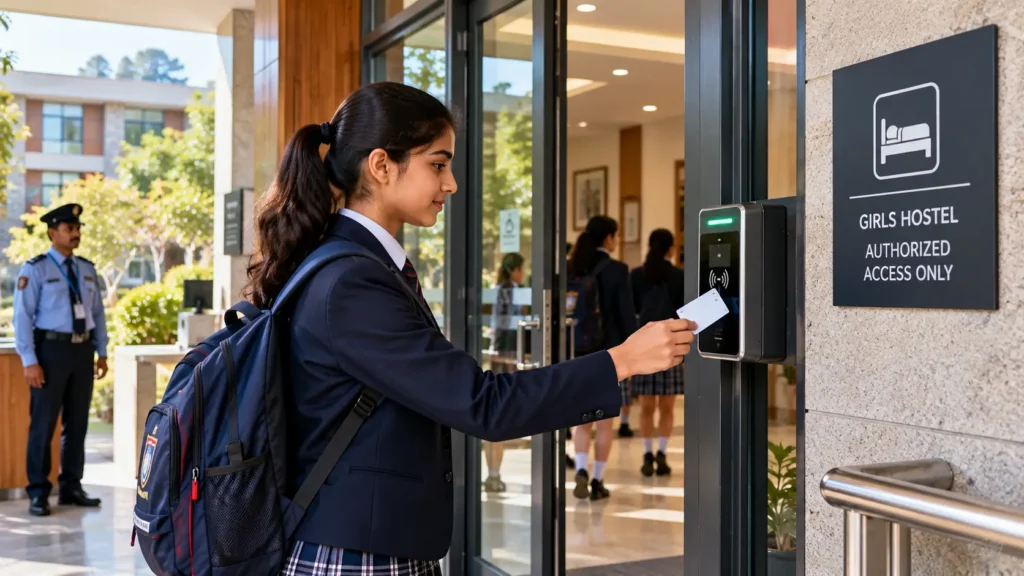
Access control is particularly useful for residential schools because different areas of a campus have different security requirements.
Academic buildings, hostels, administrative offices, laboratories and storage areas may require different levels of access. Electronic access systems can allow authorised students, teachers and employees to enter designated areas while restricting access to others.
Depending on the school’s requirements, access may be managed through cards, key fobs, mobile credentials, biometric systems or other secure methods.
A well-planned access system also makes it easier for administrators to change permissions when students or staff move between roles.
CCTV and Video Surveillance
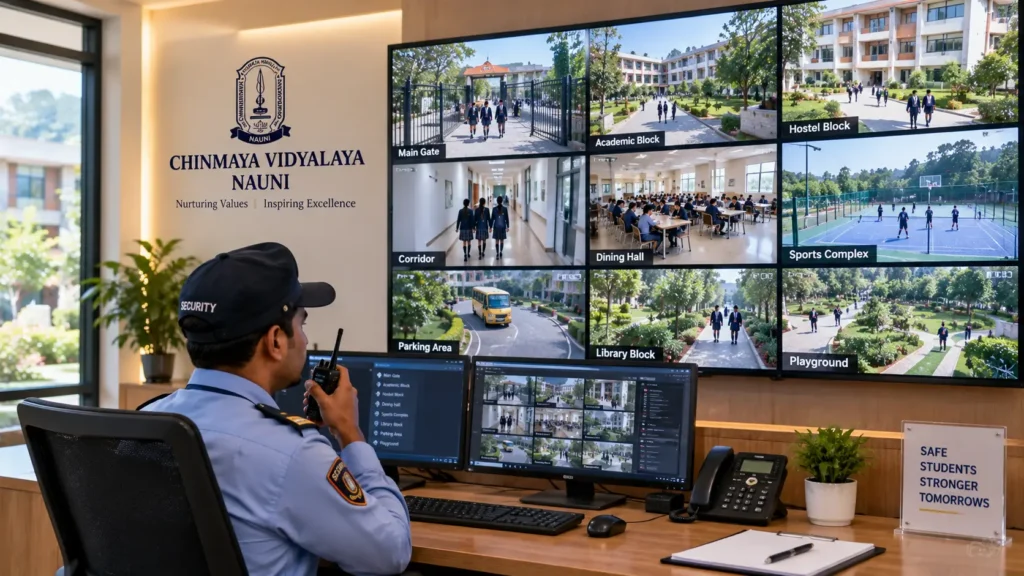
Security cameras remain one of the most widely used technologies on school campuses. Their role is not limited to recording incidents.
Strategically positioned cameras can help security teams monitor entrances, gates, corridors, parking areas, common spaces and other locations where supervision is important.
Modern systems may offer high-resolution video, night vision, motion alerts and centralised monitoring. Some schools may also use intelligent video analytics to identify unusual activity.
However, camera placement should be planned carefully. Student bedrooms, bathrooms and other private spaces should never be treated like general surveillance zones.
Emergency Alert and Communication Systems
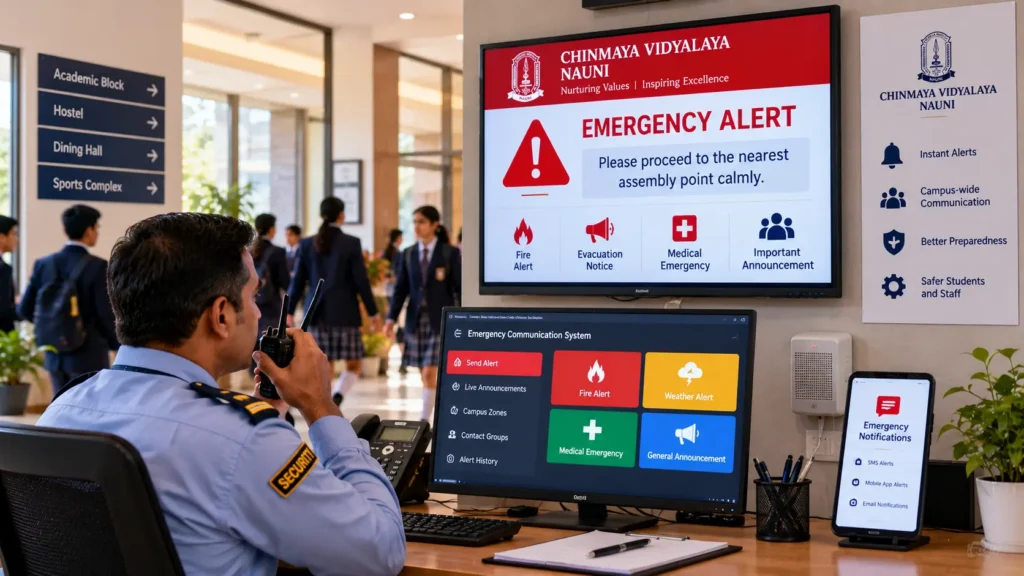
During an emergency, communication speed can make a significant difference.
Residential schools can use public-address systems, emergency notification platforms, SMS alerts, mobile applications and internal communication tools to distribute important information.
A school may need to communicate instructions about:
– Fire or evacuation
– Severe weather
– Medical emergencies
– Security incidents
– Temporary movement restrictions
– Changes to transport arrangements
– Campus-wide announcements
The technology becomes most useful when it supports a clear emergency plan. A notification system alone cannot replace trained staff and established procedures.
Visitor Management
Visitors are a normal part of school operations. Parents, guardians, contractors, vendors, alumni and guests may need access to the campus at different times.
A digital visitor management system can record visitor information, issue temporary passes and provide staff with a clearer picture of who is currently on the premises.
Some systems can also notify the relevant staff member when a visitor arrives, reducing unnecessary movement around the campus.
For residential schools, this can be particularly useful because the campus remains active outside conventional school hours.
Fire and Environmental Monitoring
Safety technology extends beyond security cameras and access systems.
Smoke detectors, fire alarms, emergency lighting and automated alert systems form an important part of residential campus protection. Schools may also use sensors to monitor environmental conditions such as water leakage, temperature or other risks in selected facilities.
Hostels deserve particular attention because students may be sleeping when an emergency occurs. Alarm systems should therefore be audible, reliable and supported by regular evacuation drills.
Using Technology Without Creating an Overly Controlled Campus
Safety and student independence need to exist together.
Residential education is intended to help young people become responsible and confident. If technology is implemented without considering the student experience, excessive surveillance can make students feel that they are constantly being watched.
Schools should therefore distinguish between security and continuous surveillance.
For instance, monitoring the main entrance can serve a clear security purpose. Installing cameras in private student spaces would cross a completely different boundary.
A responsible approach includes clearly defined policies covering:
– Where cameras are installed
– Who can view recordings
– How long footage is retained
– Who can access student information
– When access records can be reviewed
– How emergency information is shared
– How parents and students are informed about safety systems
Transparency is important. Students should understand that safety technology exists to protect the campus rather than unnecessarily restrict their daily lives.
Integrating Technology With People and Procedures
The best security technology is not necessarily the most expensive technology. Its effectiveness depends heavily on the people operating it.
Consider a situation where a security camera captures an unusual event. If nobody is monitoring the system or knows what action to take, the technology provides limited value.
Residential schools should therefore combine technology with:
– Trained security personnel
– Clearly defined emergency responsibilities
– Regular evacuation exercises
– First-aid training
– Visitor protocols
– Hostel supervision
– Emergency contact procedures
– Routine equipment testing
Staff members should also know how to respond when technology fails. Internet connectivity, power supply, hardware faults and software problems can affect digital systems.
A strong safety plan should always include alternatives for critical situations.
Protecting Student Data Alongside Physical Safety
Digital safety deserves the same attention as physical campus security.
Cameras, access-control systems, visitor records and school applications can generate considerable amounts of information. Schools need clear policies regarding how this information is collected, stored and accessed.
Only authorised personnel should have access to sensitive records. Passwords should be protected, systems should be updated regularly and access permissions should be reviewed when employees leave or change responsibilities.
Schools should also understand the security practices of technology providers before introducing new systems.
Parents are increasingly concerned not only about whether their children are safe, but also about how their children’s personal information is handled.
What Parents Should Look for When Evaluating a Residential School
Technology is only one part of a school’s overall safety and residential environment. Parents should look at the complete picture before deciding where their child will live and study.
Important factors can include hostel supervision, medical support, emergency preparedness, campus facilities, staff availability, academic programmes, student activities, location and the school’s approach to student welfare.
Parents researching different institutions can also refer to this practical guide on
What Parents Should Look for When Evaluating a Residential School
Technology is only one part of a school’s overall safety and residential environment. Parents should look at the complete picture before deciding where their child will live and study.
Important factors can include hostel supervision, medical support, emergency preparedness, campus facilities, staff availability, academic programmes, student activities, location and the school’s approach to student welfare.
Parents researching different institutions can also refer to this practical guide on how to choose the right boarding school in India to understand the wider factors that can be considered before selecting a boarding school.
A campus may have advanced security equipment, but parents should also ask how those systems are managed, how often safety procedures are reviewed and how the school responds when an unexpected situation occurs.
to understand the wider factors that can be considered before selecting a boarding school.
A campus may have advanced security equipment, but parents should also ask how those systems are managed, how often safety procedures are reviewed and how the school responds when an unexpected situation occurs.
How Schools Can Choose the Right Safety Technology
Before purchasing a new system, school administrators should begin with the campus’s actual requirements rather than selecting technology simply because it is new.
A useful evaluation can start with a few basic questions:
What are the main safety risks on the campus?
A school located in a large urban area may have different concerns from a residential school in a remote or mountainous region.
Which areas require additional protection?
Hostels, gates, laboratories, sports facilities and isolated campus areas may require different solutions.
Can the system work with existing infrastructure?
A new system should ideally integrate with existing cameras, alarms, access systems or communication platforms where practical.
Who will operate it?
Schools should consider whether their security and administrative teams have the skills needed to manage the technology.
What happens if the system fails?
Backup power, manual procedures and alternative communication channels can be important for critical systems.
What will the total cost be?
The purchase price is only one part of the investment. Schools should also consider installation, maintenance, software subscriptions, training, upgrades and replacement costs.
Building a Safer Residential School for the Long Term
Campus safety should be treated as an ongoing process rather than a one-time technology purchase.
As a school grows, its safety requirements can change. New hostels may be constructed, student numbers may increase, new laboratories may be added and campus activities may expand.
Regular safety audits can help schools identify areas where existing systems need improvement.
Technology should also be reviewed periodically to determine whether it remains reliable and appropriate. An outdated access-control system or poorly maintained camera network may provide a false sense of security.
The strongest residential-school safety strategy combines well-trained people, sensible policies, reliable infrastructure and carefully selected technology.
A Thoughtful Approach to Technology and Student Well-Being
The goal of campus safety technology should not be to turn a residential school into a heavily monitored environment. Its purpose is to give students a secure place where they can learn, live and grow with confidence.
When technology is introduced with clear objectives, appropriate privacy safeguards and trained staff, it can become an important part of the school’s wider safeguarding framework.
For parents considering a residential school, safety technology can also be one useful indicator of how seriously an institution approaches student welfare. However, technology should always be considered alongside hostel supervision, medical support, emergency preparedness, staff training and the school’s overall safety culture.
A truly safe boarding campus is created when technology supports people rather than replacing them. The right combination can help schools respond faster, manage risks more effectively and give students the freedom to experience residential education in a secure and supportive environment.