How Team Sports Help Children Build Confidence and Learn to Work Together
Children learn many important lessons outside the classroom. A sports field, for example, can teach them how to communicate, cooperate, handle pressure, and support others. Playing a game with teammates also gives children opportunities to make decisions, solve problems, and take responsibility for their actions.
For many children, team sports for children can be a simple and enjoyable way to develop these skills. Whether they are playing football, basketball, cricket, hockey, volleyball, or another team game, children learn through practice, interaction, and shared experiences. Over time, these experiences can help them become more comfortable with themselves and with the people around them.
How Team Sports for Children Build Confidence
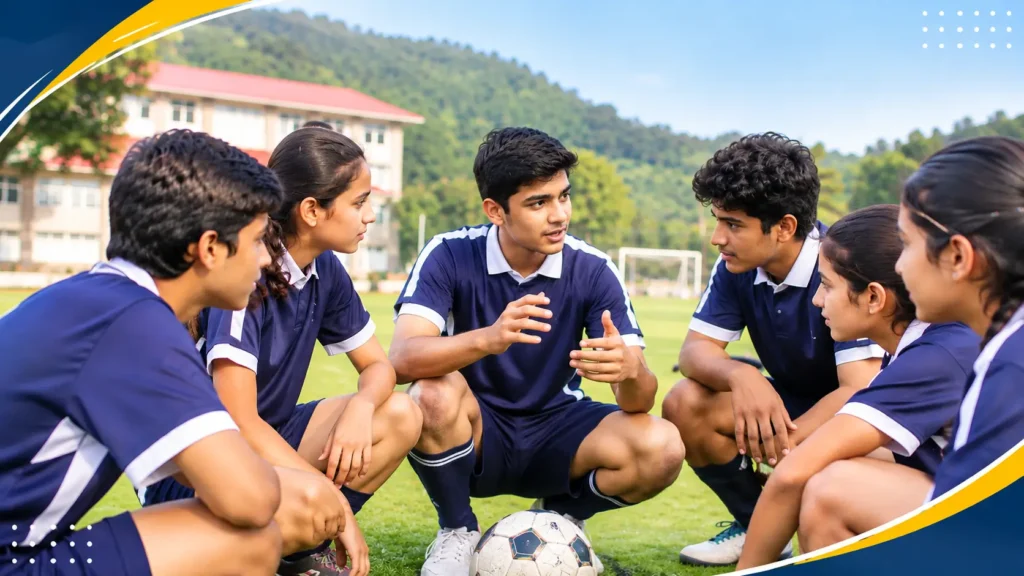
Confidence often develops when children get opportunities to try something, make mistakes, and improve. Sports provide plenty of these opportunities.
A child may not score a goal or make the right move during the first few practices. With regular training, however, the same child may gradually become better at the skill. Seeing this improvement can give them a sense of achievement.
Small successes matter. Successfully completing a pass, helping a teammate, learning a new technique, or simply having the courage to participate can make a child feel more capable.
This is one of the important benefits of team sports for children. They learn that improvement does not happen instantly. It comes from practice, patience, and a willingness to try again.
Learning to Work With Others
A team cannot depend on one player doing everything. Children quickly discover that each person has a role to play.
During a match, one player may be good at defending while another may be better at attacking. Someone else may communicate well with the group or encourage teammates when the game becomes difficult.
Working together teaches children to respect different strengths. They learn that being part of a team means listening to others, sharing responsibilities, and sometimes putting the team’s needs before their own preferences.
These experiences can support teamwork skills for students in other areas of life too. The same child who learns to cooperate during a football match may find it easier to participate in a group assignment at school.
Communication Becomes Part of the Game
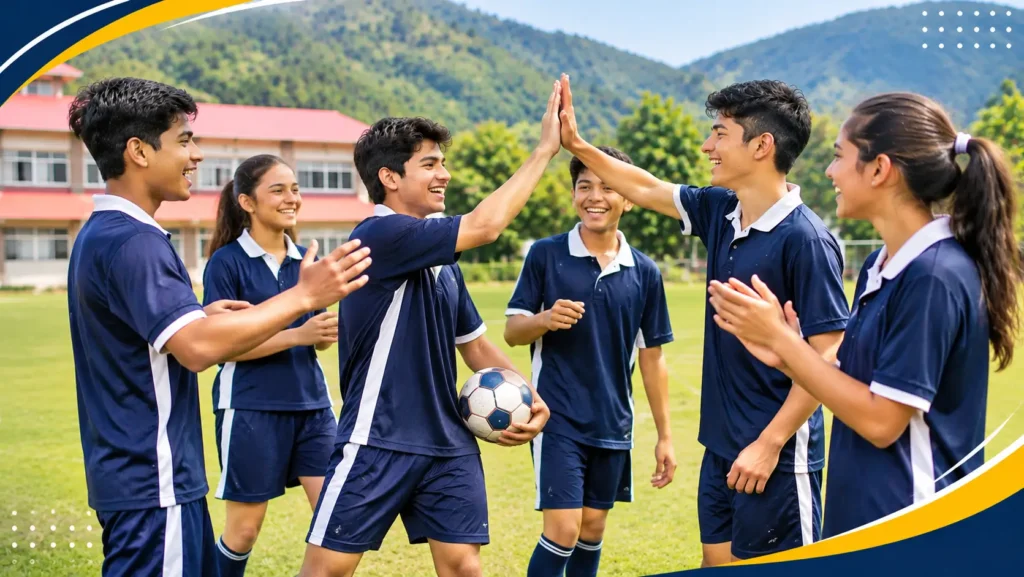
Good communication is essential in most team sports. Players need to tell teammates where they are, ask for a pass, give instructions, and respond to what is happening around them.
Children learn that communication is more than simply speaking. They also need to listen and pay attention to the people around them.
For example, a player who does not listen to a teammate’s instruction may miss an opportunity during a match. With experience, children begin to understand why clear communication matters.
These regular interactions can also support social skills in children. They get used to talking to different people, responding to feedback, and expressing their ideas in a group.
Learning How to Handle Winning and Losing
Winning feels good, but losing is also part of playing sports. Children may feel disappointed after losing an important match, especially when they have worked hard.
Learning to deal with that disappointment can be valuable.
Instead of seeing a loss as the end of the experience, children can learn to look at what happened. Maybe the team did not communicate well. Perhaps they need more practice with a particular skill. Sometimes the other team simply played better that day.
These experiences teach children that results do not always go their way. They can lose, learn from the experience, and return to practice.
The same lesson can be useful outside sports. Children will face setbacks in school, friendships, competitions, and other areas of life. Learning how to respond calmly can help them handle those situations more effectively.
Developing Leadership Skills Through Sports
Leadership does not always mean being the team captain. A child can show leadership by encouraging a teammate, helping a new player understand the rules, or staying positive when others feel discouraged.
Team sports give children many chances to practise these behaviours.
A child who regularly takes responsibility during practice may gradually become more comfortable making decisions. They may also learn when to speak up and when to listen.
This can contribute to leadership skills for students. Children begin to understand that good leadership is not simply about giving instructions. It also involves responsibility, cooperation, patience, and consideration for others.
Sports Teach Responsibility and Discipline
Being part of a team comes with responsibilities. Children may need to arrive on time for practice, bring their equipment, follow instructions, and complete exercises even when they are not particularly interested in doing them.
Regular training also teaches children that improvement requires consistency.
A child cannot expect to master a skill after practising it once. They need to repeat it, listen to the coach, correct mistakes, and keep working.
This is where sports and child development can connect with everyday habits. The discipline learned during regular practice can encourage children to take other responsibilities more seriously.
Making Friends and Feeling Included
Sports can also give children a natural setting to meet others.
When children practise and play together regularly, they share experiences. They celebrate good moments, deal with difficult matches, and encourage each other during training.
For some children, joining a team can make it easier to form friendships. They already have a shared interest and a common activity to talk about.
For families considering a boarding school in Shimla, opportunities for sports and group activities can be an important part of understanding a child’s overall school experience. Living and learning alongside other students can give children regular opportunities to practise cooperation, communication, and responsibility through both organised sports and everyday activities.
Team environments can also teach children to include others. A new player may need encouragement or help understanding how the team works. Learning to welcome someone can help children become more considerate of others.
Parents and Schools Can Encourage Healthy Participation
Children do not need to become professional athletes to benefit from sports. The focus should be on participation, enjoyment, learning, and staying active.
Parents can encourage children by showing interest in their activities rather than focusing only on winning. Asking questions such as “Did you enjoy the game?” or “What did you learn today?” can lead to more meaningful conversations than simply asking whether the team won.
Schools can also create opportunities for children with different interests and abilities to participate. Not every child will be the fastest runner or strongest player, but every child can have a role.
Coaches and teachers can help by creating an environment where mistakes are treated as part of learning. Children should feel comfortable trying, improving, and asking questions without being embarrassed.
A Skill Set That Goes Beyond the Sports Field
The value of team sports goes beyond the match itself. Children learn to communicate with others, accept responsibility, manage disappointment, and appreciate the contribution of their teammates.
They also learn that confidence does not mean always being the best player. Sometimes confidence simply means being willing to try, speak up, make a mistake, and try again.
For parents and schools, encouraging team sports for children can therefore be about much more than physical activity. It can give children regular opportunities to practise the social and personal skills they will need in classrooms, friendships, and everyday situations.