
Helping Your Child Adjust to Boarding School: A Complete Parent’s Guide
Sending a child to boarding school is a decision that brings excitement, hope, and a little anxiety into every parent’s life. Parents imagine their children becoming independent, discovering new interests, making friends, and building a strong foundation for the future. Yet, there is often one concern that stays in the back of their minds: Will my child feel lonely without us?
For children who have always lived with their families, moving into a residential school can feel like a major change. Everyday comforts such as eating meals with parents, sleeping in their own room, spending time with siblings, and following familiar routines are suddenly replaced by a new environment. Even a child who is excited about joining a boarding school may miss home once the initial excitement settles.
Homesickness is not unusual, nor does it mean a child is unsuitable for boarding school life. It is an emotional response to change, familiarity, and separation from loved ones. What matters is how children are supported during this transition.
For parents exploring residential education, understanding how to deal with homesickness at boarding school can make the admission journey more reassuring. With thoughtful preparation, open communication, and a welcoming school environment, children can gradually become more comfortable with their new surroundings.
Why Do Children Feel Homesick at Boarding School?
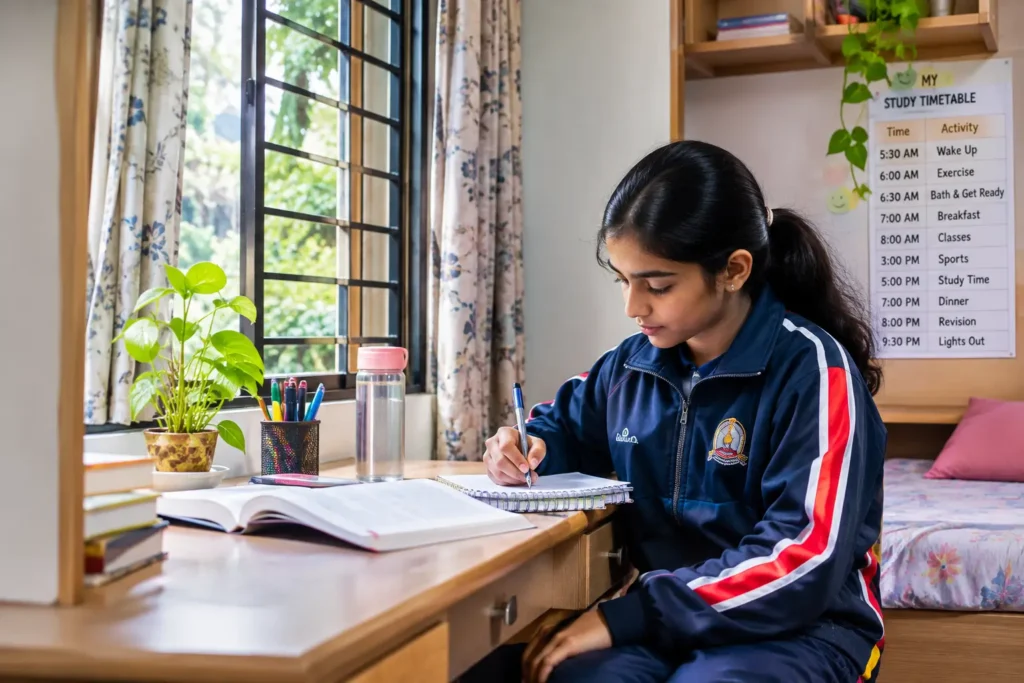
Imagine a child who has never spent more than a weekend away from home. Suddenly, they are expected to share a residential environment with other students, follow a fixed timetable, and manage several everyday responsibilities independently.
The adjustment can take time. Homesickness often develops because children are moving away from what feels familiar and learning to navigate a completely different routine. Some may express their feelings openly, while others become quiet or withdrawn.
There are several reasons behind this experience.
Separation from family: Parents are often a child’s primary source of comfort. Being away from them can initially create feelings of uncertainty and loneliness.
Unfamiliar surroundings: A new room, different food, unfamiliar faces, and a different daily schedule can make children miss the comfort of home.
Difficulty forming friendships: Not every child finds it easy to approach new classmates. Some need more time to feel included in a group.
Loss of familiar routines: Children may miss family conversations, weekend outings, favourite meals, or simple activities they previously enjoyed.
Fear of handling things independently: Managing belongings, maintaining personal hygiene, organising study time, and making everyday decisions may feel challenging at first.
Understanding these reasons helps parents respond with patience rather than assuming their child is unhappy with the school itself.
How Can Parents Recognise Homesickness in Their Children?
Children do not always have the words to explain what they are feeling. A child might say they are tired, complain about school frequently, or become unusually quiet during conversations with parents.
Some common signs of homesickness include:
– Frequently talking about missing parents, siblings, or home.
– Becoming emotional during phone calls.
– Showing less interest in activities they previously enjoyed.
– Finding it difficult to sleep or maintain regular eating habits.
– Avoiding conversations or social interactions with classmates.
– Repeatedly asking when they can return home.
– Experiencing difficulty concentrating on studies.
One difficult day does not necessarily indicate a serious problem. Parents should look at the overall pattern of behaviour and speak with school staff if concerns continue.
8 Practical Ways Parents Can Help Children Adjust to Boarding School
Preparing children for residential life should begin before their first day at school. Parents can make the experience less overwhelming by introducing small changes at home and maintaining a supportive attitude throughout the transition.
1. Talk About Boarding School Before Admission
Children should know what to expect before they leave home. Have honest conversations about school routines, friendships, classroom learning, residential life, and the opportunities they may experience.
Explain that they might miss home occasionally, and that this feeling is completely understandable. Avoid presenting boarding school as a place where children must suddenly become independent. Give them time to understand the change.
2. Help Them Develop Everyday Independence
A child who knows how to manage simple responsibilities may feel more confident in a residential environment.
Encourage them to organise their belongings, maintain personal hygiene, prepare their school bag, keep their room tidy, and follow a regular sleeping schedule.
These activities may seem small, but they help children develop a sense of responsibility before joining boarding school.
3. Involve Children in the Admission Preparation
Instead of making every decision for your child, involve them in the preparation process.
Let them help select permitted personal belongings, organise their luggage, and understand what they will need during their stay.
If possible, arrange a school visit before admission. Seeing the campus and becoming familiar with the surroundings can reduce uncertainty.
4. Let Them Carry Familiar Reminders of Home
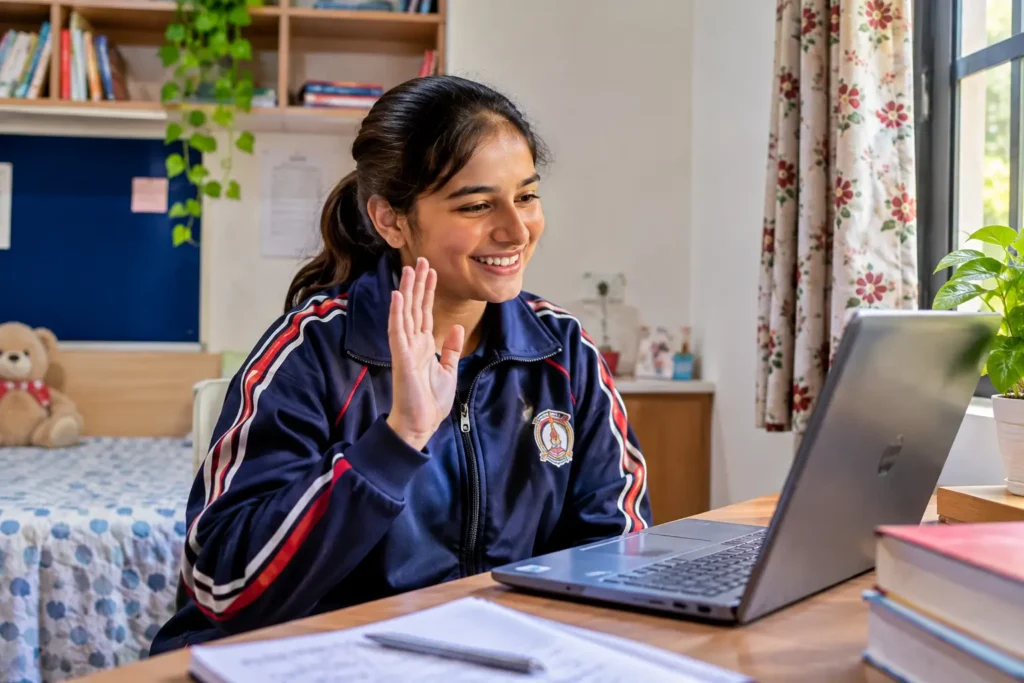
A family photograph, favourite book, or another permitted personal belonging can provide comfort during the early days.
Such familiar objects can remind children that their connection with family remains strong even when they are physically away.
Parents should check school guidelines before sending personal belongings.
5. Maintain Meaningful Communication
Regular communication helps children feel connected to their families. However, conversations should not focus entirely on how much they miss home.
Instead of repeatedly asking, “Are you feeling lonely?” try asking:
– What was the most interesting thing you did today?
– Did you speak to anyone new?
– Which subject did you enjoy?
– Did you participate in any activities?
– Is there anything you would like help with?
These questions encourage children to talk about their experiences and gradually become more comfortable sharing their everyday lives.
6. Encourage Friendships and Group Participation
Friendships can make a significant difference in a child’s boarding school experience.
Encourage your child to participate in sports, group activities, cultural programmes, and classroom discussions. Shared experiences often provide natural opportunities to connect with classmates.
Do not expect friendships to develop immediately. Some children are comfortable meeting new people, while others prefer to observe before becoming involved.
7. Appreciate Their Small Achievements
A child’s first independent achievement deserves recognition.
Perhaps they have organised their belongings without help, participated in a competition, made a new friend, or completed a task independently.
Acknowledge these moments during conversations. Recognition helps children understand that their efforts matter and that they are making progress.
8. Work Together With the School
Parents and school staff should maintain open communication, particularly during the initial adjustment period.
Ask about your child’s participation, interactions with classmates, classroom engagement, and general adjustment.
If your child expresses concerns, listen carefully and discuss appropriate ways to address them with the school.
A supportive relationship between parents and school authorities can help children feel understood and supported.
How Do Friendships and School Activities Help Children Feel Comfortable?
For many children, the turning point in boarding school life comes when they begin enjoying everyday experiences with their classmates.
A shared sporting activity, a classroom project, an evening conversation, or preparing for a school event can create opportunities for meaningful connections.
Activities also allow children to discover interests beyond academics. Some may develop confidence through sports, while others may enjoy music, art, reading, or cultural participation.
Parents should encourage children to explore different opportunities without putting pressure on them to excel immediately.
When children begin looking forward to activities and spending time with classmates, residential life can gradually feel more familiar.
How Long Does It Take for a Child to Overcome Homesickness?
There is no standard adjustment period for every child.
Some children become comfortable relatively quickly, while others need more time to understand their new surroundings and develop relationships.
The experience may depend on age, personality, previous separation experiences, family support, and the school environment.
Parents should avoid comparing their child’s progress with that of other students. A quiet child who takes longer to make friends is not necessarily struggling more than an outgoing child.
Instead, look for gradual improvements. Is your child participating more often? Are conversations becoming more positive? Have they started discussing classmates or activities they enjoy?
These small changes can indicate growing confidence.
If distress continues or begins affecting sleep, appetite, social relationships, or academic participation, parents should communicate with school authorities and consider appropriate professional support.
What Makes a School Environment Comfortable for Children?
A child’s experience at boarding school depends on much more than classrooms and academic facilities. The atmosphere in which students learn, interact, and spend their everyday lives also matters.
Parents should pay attention to whether a school encourages respectful relationships, positive communication, student participation, and a sense of belonging.
A supportive educational environment should give children opportunities to ask questions, express concerns, explore their interests, and develop at their own pace.
When evaluating these qualities, parents may also find our guide on creating a child-friendly school environment useful. It discusses the characteristics that contribute to a welcoming and positive learning experience.
Before selecting a residential school, parents should also ask about:
– Student supervision and safety arrangements.
– Hostel accommodation and hygiene.
– Teacher-student interaction.
– Daily schedules and residential routines.
– Sports and extracurricular opportunities.
– Communication between parents and school authorities.
– The process for addressing student concerns.
A school visit and a conversation with the admission team can help parents understand whether the environment is appropriate for their child.
Getting to Know Chinmaya Vidyalaya Nauni
Choosing a residential school is not simply about finding a place where children can complete their education. It is about considering the environment in which they will learn, develop relationships, discover their interests, and gradually take responsibility for themselves.
Chinmaya Vidyalaya Nauni is a CBSE residential school situated in Nauni, Solan, Himachal Pradesh. For families exploring residential education, the school offers an opportunity to learn more about its academic environment and overall educational approach.
Parents considering Chinmaya Vidyalaya Nauni can explore the school’s website, understand the available educational and residential facilities, and speak with the admission team to clarify their expectations.
It is equally important to discuss how children are supported during their transition into residential life, how parents can stay connected with the school, and whom students can approach when they need assistance.
Making an informed decision helps parents select a school that aligns with their child’s educational needs, personality, and developmental journey.
Helping Your Child Build Confidence Away From Home
The first few days at boarding school may bring mixed emotions for both children and parents. There may be excitement about new experiences, but also moments when familiar faces and surroundings are missed.
Parents do not need to eliminate every feeling of homesickness. Instead, they can help children understand their emotions, express their concerns, and gradually become comfortable with new experiences.
Patience, encouragement, healthy communication, and cooperation with the school can make this transition more manageable.
As children become familiar with their routines, develop friendships, and discover their interests, they may begin to see boarding school as a place where they can learn and grow.
Explore Chinmaya Vidyalaya Nauni for the 2027–28 academic session and take an informed step towards your child’s residential education journey.